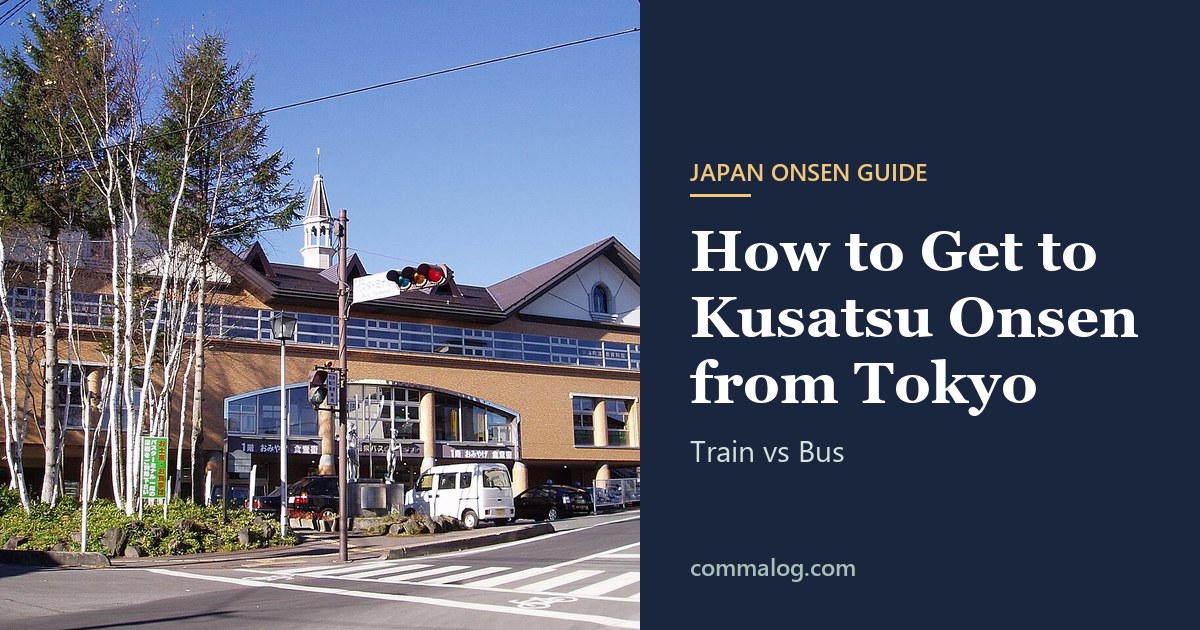
Kusatsu is one of the most famous onsen towns in Japan, and it has no train station. That single fact shapes every way of getting there. Whatever you pick, the last stretch is a bus climbing up into the mountains of Gunma.
The good news: the trip is easy once you know the three real options. You can ride a limited express from Ueno and switch to a short JR bus, ride a highway bus straight from central Tokyo with no transfer at all, or go via Karuizawa on the Hokuriku Shinkansen and take a local bus from there. Each one makes sense for a different kind of traveler.
The Short Answer
If you hold a Japan Rail Pass, go by train. The limited express and the JR bus at the end are both JR, and the timing is predictable.
If you don’t have a pass and you just want to sit down in Tokyo and get off in Kusatsu, take the direct highway bus. No platforms, no transfer, no hauling a suitcase between a train and a bus.
And if you’re combining Kusatsu with Karuizawa, or you’re coming from Nagano or Kanazawa, the Karuizawa route is the natural fit.
The Three Routes Side by Side
Travel times below come from the Kusatsu Onsen Tourism Association’s access page. Treat them as typical, not guaranteed: mountain roads slow down in snow and holiday traffic.
| Route | Legs | Typical time | Transfers | Best for |
|---|---|---|---|---|
| Limited express + JR bus | Ueno → Naganohara-Kusatsuguchi (Limited Express Kusatsu-Shima, about 2 hr 33 min) → JR bus to Kusatsu (25 min) | About 3 hr plus the connection | 1 | JR Pass holders, anyone who likes trains |
| Local trains + JR bus | Ueno → Takasaki (Takasaki Line, about 1 hr 45 min) → Naganohara-Kusatsuguchi (Agatsuma Line, about 1 hr 30 min) → JR bus (25 min) | About 3.5-4 hr plus connections | 2 | Budget travelers when the express doesn’t fit |
| Direct highway bus | Tokyo Station or Busta Shinjuku → Kusatsu Onsen Bus Terminal (Joshu Yumeguri) | Roughly 4 hr, traffic dependent | 0 | Heavy luggage, no JR Pass, simplicity |
| Shinkansen via Karuizawa | Tokyo → Karuizawa (Hokuriku Shinkansen, about 1 hr 10 min) → Kusakaru Kotsu or Seibu Kanko bus (1 hr 18 min to 1 hr 55 min) | About 2.5-3 hr plus the connection | 1 | Karuizawa add-ons, travelers coming from Nagano or Kanazawa |
On paper the Karuizawa route can be the fastest. In practice it depends on lining up the shinkansen with a bus that doesn’t run as often as trains do, so check both timetables together before you commit.
Option 1: Limited Express Kusatsu-Shima from Ueno
This is the classic way in, and the one we’d pick for most first-timers with a rail pass.
The Limited Express Kusatsu-Shima leaves from Ueno Station and runs straight to Naganohara-Kusatsuguchi, the closest station to Kusatsu, in about 2 hours 33 minutes. You don’t change trains. You get reserved seats, a luggage rack and a slow, pretty climb up the Agatsuma valley in the second half.
At Naganohara-Kusatsuguchi you walk out of the station to the bus stop and board the JR bus bound for Kusatsu Onsen. It takes about 25 minutes and drops you at Kusatsu Onsen Bus Terminal, at the top of the town.
A few things to know:
- The express runs only a few times a day. It isn’t a shuttle. Build your day around its departure, not the other way round.
- Reserve a seat. Weekends, autumn foliage season and the winter ski months fill up. Book as soon as your dates are fixed.
- Ueno, not Tokyo Station. If you’re staying near Tokyo Station, it’s a short hop on the JR Yamanote Line to Ueno. Give yourself a buffer.
- The bus waits for the train, more or less. Buses are timed around arrivals, but after a late train you may wait for the next one. Grab the timetable at the station.
The cheaper local-train version
If the express times don’t work, you can do the same trip on ordinary trains: the Takasaki Line from Ueno to Takasaki, then the Agatsuma Line to Naganohara-Kusatsuguchi. It’s slower and you’ll change at least once, but it saves the limited express surcharge. With a suitcase, we wouldn’t bother. With a backpack and time to kill, it’s a pleasant ride.
Option 2: The Direct Highway Bus
Here’s the thing a lot of guides get wrong: you can ride a bus from Tokyo directly to Kusatsu without changing. The Joshu Yumeguri highway bus runs between Tokyo Station, Busta Shinjuku (the big bus terminal at Shinjuku Station’s south side) and Kusatsu Onsen Bus Terminal.
The tourism association also lists direct highway buses from Shibuya, Ikebukuro, Kichijoji, Yokohama and Omiya, so check whichever is closest to your hotel.
Why you’d take it:
- Zero transfers. You put your bag under the bus in Tokyo and pick it up in Kusatsu.
- It usually costs less than the train without a pass.
- It ends at the same bus terminal as the train route, so your ryokan pickup or walk is identical.
Why you might not:
- It’s at the mercy of traffic. Friday evenings, holiday weekends and snowy days can add a lot.
- Seats must be reserved, and popular departures sell out on weekends.
- No JR Pass coverage. If you’ve already paid for a pass, you’re leaving value on the table.
If you get carsick on winding roads, sit near the front and skip the big lunch before you board. The last part of the climb has plenty of curves.
Option 3: Via Karuizawa on the Shinkansen
Take the Hokuriku Shinkansen from Tokyo to Karuizawa (about 1 hour 10 minutes), then a Kusakaru Kotsu or Seibu Kanko bus to Kusatsu. The tourism association puts the bus ride at 1 hour 18 minutes to 1 hour 55 minutes, depending on which service you catch (some routes go via Manza and Kazawa).
This route shines in two cases. First, if you want a night or an afternoon in Karuizawa anyway. Second, if you’re arriving from the west: from Nagano, Kanazawa or Osaka the shinkansen gets you to Karuizawa without backtracking into Tokyo.
The catch is the bus. It runs less often than the trains, and only the shinkansen leg is JR. Line up the times before you book anything.
From Karuizawa Station to Kusatsu Onsen Bus Terminal
Follow the signs from Karuizawa Station to the bus stops and look for buses to Kusatsu Onsen. Both operators end at Kusatsu Onsen Bus Terminal. Buy your shinkansen ticket for a time that leaves a comfortable gap, especially in winter when road conditions shift.
Is the JR Pass Worth It for Kusatsu?
On its own, a Kusatsu round trip won’t justify a nationwide Japan Rail Pass. But if you already have one for a bigger trip, Kusatsu is an easy win.
- Covered: the Limited Express Kusatsu-Shima (with a seat reservation), the local trains on the Takasaki and Agatsuma lines, and the Hokuriku Shinkansen to Karuizawa.
- Usually covered: the JR bus between Naganohara-Kusatsuguchi and Kusatsu, since it’s run by a JR group company. Confirm at the JR ticket office when you reserve your train.
- Not covered: the highway buses and the Kusakaru Kotsu and Seibu Kanko buses from Karuizawa.
If you’re only in eastern Japan, look at JR East’s regional passes too. Check exactly which lines your pass covers before you plan around it; the regional passes differ.
Which Route Fits You
| You are… | Take this |
|---|---|
| A JR Pass holder | Limited express from Ueno + JR bus |
| Traveling with big suitcases, no pass | Direct highway bus from Tokyo Station or Shinjuku |
| Combining Kusatsu and Karuizawa | Shinkansen to Karuizawa + bus |
| Coming from Osaka, Kyoto or Kanazawa | Shinkansen to Karuizawa + bus |
| A family with young kids | Limited express: bathroom on board, room to move |
| On a tight budget with time to spare | Local trains via Takasaki + JR bus |
Families, take note. A four-hour bus with small children and no bathroom breaks you control can be long. The train gives you room to stand up and walk.
Is Kusatsu Worth the Trip?
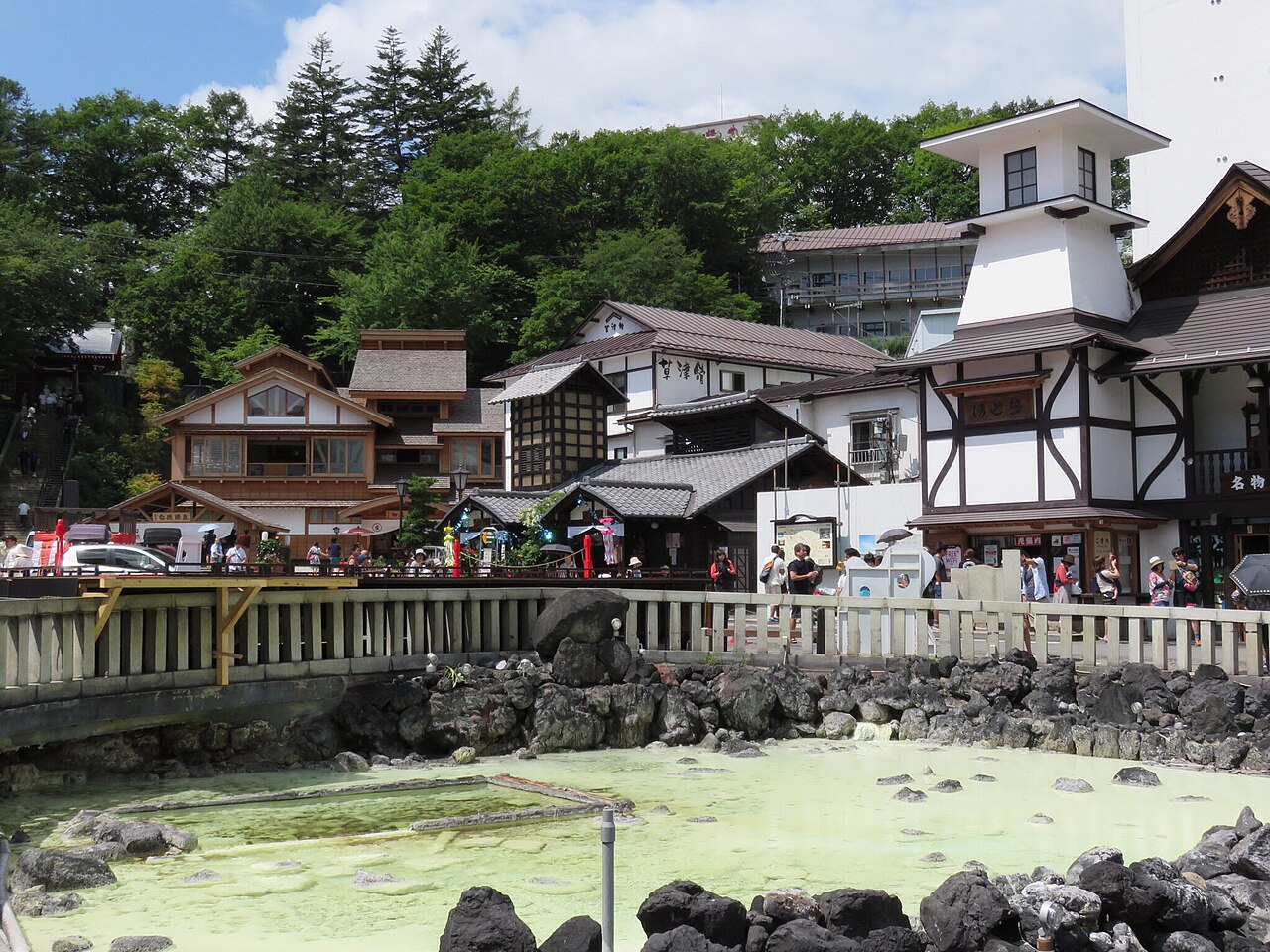
For most onsen lovers, yes. Kusatsu is one of Japan’s best-known hot spring towns for a reason: the steaming Yubatake (the hot water field) sits right in the middle of town, the streets around it are made for wandering in a yukata, and the water is famously strong and acidic. Traditionally it’s one of the springs people travel across Japan to soak in.
It’s also a destination that rewards staying the night. The town is at its best after dark, when the Yubatake is lit up and the day-trippers have gone. Getting there takes three to four hours each way, so a same-day round trip from Tokyo means more time in transit than in the bath. Book a ryokan and give it at least one night.
If you’re weighing Kusatsu against Hakone or Kinosaki, the access question matters. Hakone is quicker from Tokyo. Kusatsu takes longer but feels more like a proper mountain onsen town once you arrive.
Weather and Seasons Change the Plan
Kusatsu sits high in the mountains, and it’s noticeably colder than Tokyo year-round. That affects the trip more than you’d think.
- Winter (December-March): expect snow and cold. Roads stay open, but buses can run late. Pack shoes with grip; the town’s streets slope and get icy. This is also ski season at Kusatsu Onsen Ski Resort, so weekend seats sell out faster.
- Spring and early summer: cool, comfortable and quieter. A good time for first-timers.
- Autumn (October-November): foliage on the way up is lovely and the trains and buses fill up. Reserve early.
- Holiday peaks: Golden Week, Obon in mid-August and New Year are busy everywhere. Lock in seats the moment you book your ryokan.
Before You Leave Tokyo: A Checklist
- Reserve your limited express seat or highway bus seat as soon as your ryokan is confirmed.
- Screenshot the bus timetable for the last leg (Naganohara-Kusatsuguchi or Karuizawa to Kusatsu).
- Ask your ryokan whether they pick up from Kusatsu Onsen Bus Terminal, and what time check-in starts.
- Keep an IC card like Suica topped up, plus some cash for buses.
- If you’re on a JR Pass, confirm the JR bus and seat reservations at the ticket office.
- In winter, leave buffer time and pack warm layers and grippy shoes.
- Ship big suitcases ahead with a luggage forwarding service if you’re continuing on, and travel light to the mountains.
Arriving at the Bus Terminal
Every route above ends at Kusatsu Onsen Bus Terminal, a short downhill walk from the Yubatake. Many ryokan are walkable from there, but the town is hilly and the streets are narrow. If your ryokan offers a pickup, take it, especially with luggage or in snow.
Once you’ve dropped your bags, walk down to the Yubatake before dinner. After three hours of trains and buses, that first look at the steam is the payoff.
Frequently Asked Questions
What is the closest train station to Kusatsu Onsen?
Naganohara-Kusatsuguchi Station on the JR Agatsuma Line. From there a JR bus takes about 25 minutes to Kusatsu Onsen Bus Terminal. The Limited Express Kusatsu-Shima runs to it directly from Ueno in about 2 hours 33 minutes.
Is there a direct bus from Tokyo to Kusatsu Onsen?
Yes. The Joshu Yumeguri highway bus runs from Tokyo Station and Busta Shinjuku straight to Kusatsu Onsen Bus Terminal with no transfer, and other direct buses run from Shibuya, Ikebukuro, Kichijoji, Yokohama and Omiya. Reserve seats in advance, especially on weekends.
How do I get from Karuizawa Station to Kusatsu Onsen Bus Terminal?
Take a Kusakaru Kotsu or Seibu Kanko bus from Karuizawa Station. The ride takes about 1 hour 18 minutes to 1 hour 55 minutes depending on the service, and buses run less often than trains, so check the timetable before booking your shinkansen.
Can I use the JR Pass to get to Kusatsu Onsen?
For most of the way. The limited express from Ueno, the local JR lines and the Hokuriku Shinkansen to Karuizawa are JR. The JR bus from Naganohara-Kusatsuguchi is run by a JR group company; confirm coverage when you reserve. Highway buses and the Karuizawa buses aren't covered.
Is Kusatsu Onsen worth visiting?
If you love hot springs, yes. The Yubatake in the center of town and the strong, acidic water make it one of Japan's best-known onsen towns. Because the trip takes three to four hours each way, stay at least one night rather than doing a day trip.
How we research: this guide draws on official tourism and reference sources and well-established Japan travel practice. Policies, rates and child rules differ from ryokan to ryokan, so confirm the details with the property before booking.
1 thought on “How to Get to Kusatsu Onsen from Tokyo: Train vs Bus”