Kinosaki Onsen is the rare Japanese hot spring town where the baths aren’t hidden inside your hotel. They’re out on the street, seven of them, and the whole point of a visit is walking between them in a yukata. People have been coming here for the waters since the 8th century, and the town still runs on that rhythm: soak, stroll, eat, soak again.
So the honest answer to “what is there to do in Kinosaki?” is: not a huge amount, and that’s the appeal. If you want nightlife or a packed sightseeing day, you’ll be bored by dinnertime. If you want a slow day or two of baths, river walks and crab, it’s one of the easiest onsen towns in Japan for a first-timer to get right.
Is Kinosaki Onsen Right for You?
Kinosaki sits on the Sea of Japan side of Hyogo, in Kansai. It’s officially part of Toyooka city, but it feels like its own place, and it plays very differently from a big-resort onsen area.
You’ll probably love it if you:
- Want onsen culture in a form you can actually wander around and see
- Like slow travel and don’t mind an early night
- Are a couple or solo traveler happy to spend hours in hot water and on quiet walks
- Enjoy photographing traditional architecture and gardens
- Are traveling as a family that’s content with a calm, cultural trip
Look elsewhere (or keep it to a short stay) if you:
- Want bars, late restaurants or city-style entertainment
- Are traveling with young kids who need active entertainment every day
- Have visible tattoos and were hoping to use the shared public baths freely (more on workarounds below)
- Only have a few hours. A day trip technically works, but you’ll miss the evening stroll that makes the place
Getting There by Train
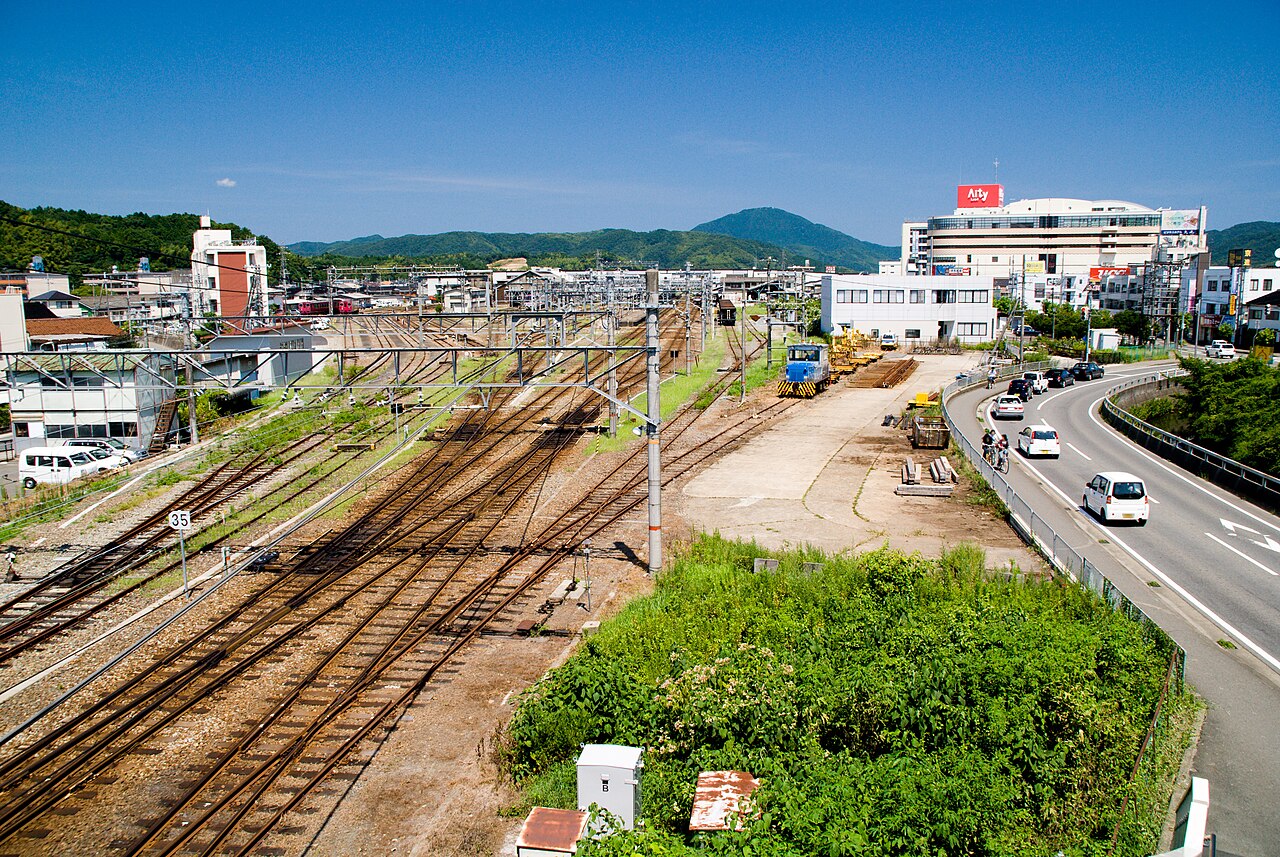
Kinosaki Onsen station is on the JR San’in Main Line, and three limited express services run here. Which one you take mostly depends on where you’re starting.
| Train | Starts from | Journey time | Good for |
|---|---|---|---|
| Kinosaki | Kyoto (via Nijo) | About 2 hr 25 min | Coming from Kyoto; the cheapest of the three |
| Kounotori | Shin-Osaka | About 2 hr 44 min | Coming from Osaka or off a shinkansen at Shin-Osaka |
| Hamakaze | Osaka | About 2 hr 45 min | Combining with Himeji, since it runs via Himeji |
The Kounotori crosses straight over the mountains, while the Hamakaze takes the Himeji route. If you want to see Himeji Castle on the way, the Hamakaze is the one that makes that easy. Book your limited express seats ahead, especially on weekends and in winter, and check current fares when you do, since they change.
Luggage
The station has coin lockers, and the information center can hold bags for a fee. That matters, because you’ll want your hands free. Most travelers will be heading to a ryokan anyway, so if you’re arriving before check-in, ask your ryokan whether they’ll hold bags too.
Getting Around Town
Walk. Most of what you’ll want to see is within walking distance of the station, and the town is built for strolling. Taxis exist but they’re rare, so don’t plan on hailing one.
For a bit more range, rent a bicycle at the SOZORO Tourist Information Center near the station. It’s handy for the river paths and for anyone who wants to cover ground beyond the main bathhouse strip. Runners should know there are trails along the river, which make a nice change of pace after a morning of sitting in hot water.
The Seven Public Baths
This is the main event. Kinosaki has seven public bathhouses, and the classic plan is to visit several in one stay, wandering between them in the yukata your ryokan lends you.
One big caveat first: Satono-Yu has been closed for long-term renovation since April 1, 2024. Check whether it has reopened before you build your day around it. In practice, plan on six.
| Bathhouse | What sets it apart | Timing note | Best for |
|---|---|---|---|
| Ichino-yu | The famous one; widely praised for its architecture and decoration | First-timers who want the headline bath | |
| Goshono-yu | Often called the prettiest, with traditional gardens and elaborate outdoor baths | Winter visits; especially lovely in snow | |
| Mandara-yu | Temple-inspired architecture | Opens late, 3pm | An evening soak |
| Yanagi-yu | Traditionally associated with healing wounds | Afternoon only, opens 15:00 | Pairing with Mandara-yu after 3pm |
| Kono-yu | Tied to the town’s legend of storks bathing their wounds here; low-key and relaxing | A quiet, unhurried soak | |
| Jizo-yu | Concrete building with high, roomy ceilings; has rentable private baths | Tattooed travelers, mixed-gender groups, families wanting privacy | |
| Satono-Yu | Closed for renovation as of April 2024 | Check status | Skip unless reopened |
A note on the “healing” waters
You’ll see a lot of talk about wounds. Kinosaki’s springs have long been said to help with them, and the stork legend at Kono-yu is part of the town’s founding story. Treat that as tradition and local lore, which is how it’s best enjoyed. Nobody needs a medical reason to sit in a hot bath.
How to plan your bath crawl
The main trap is timing. Two of the baths, Yanagi-yu and Mandara-yu, don’t open until the afternoon (3pm), so a morning bath crawl will have gaps. Trying to hit every bath in a single day is how people end up rushing, which defeats the purpose.
A better approach:
- Morning: One or two of the baths that are already open, then go do something else
- Afternoon from 3pm: Yanagi-yu and Mandara-yu
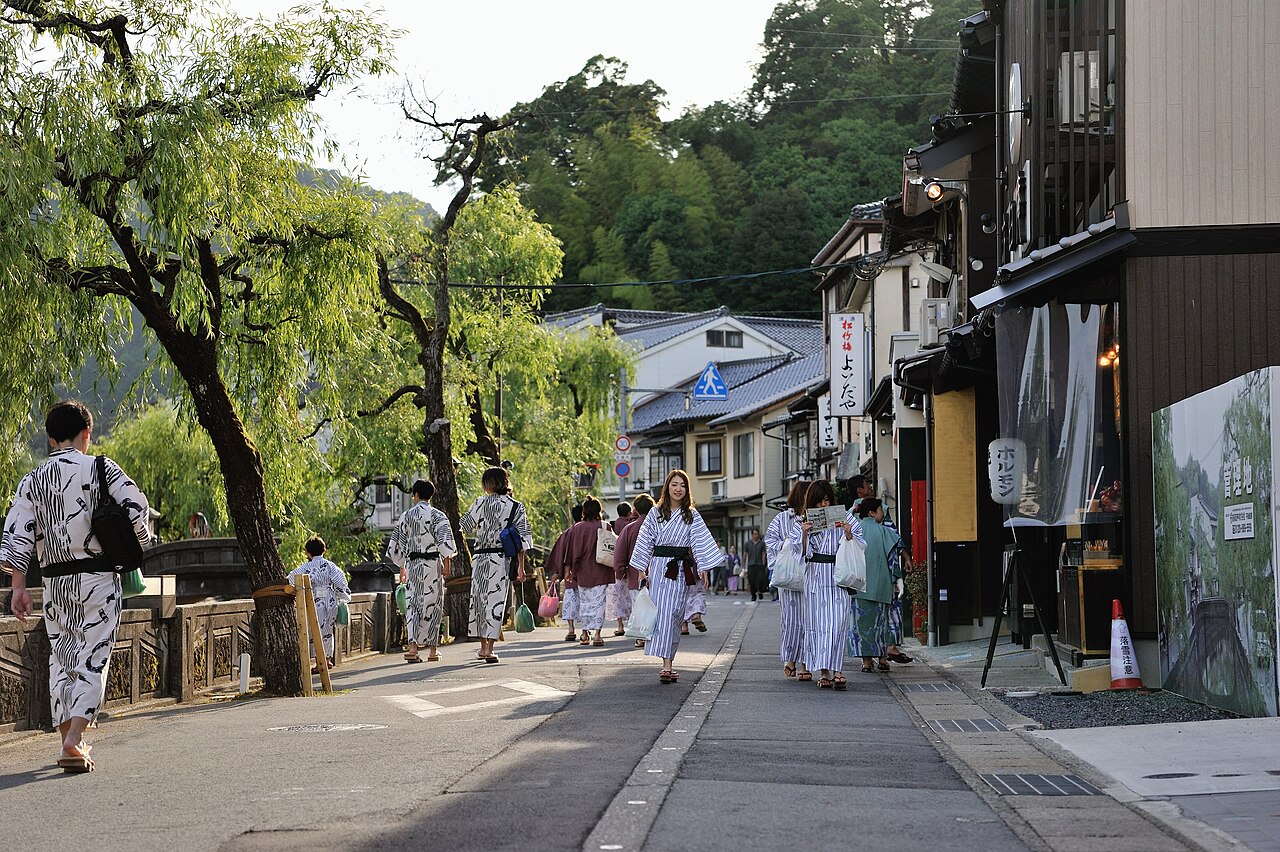
- After dinner: The evening stroll in yukata, with one more soak. This is the part of Kinosaki most people remember
- Next morning: Whatever you missed, before checkout
If you only manage three or four, make them Ichino-yu, Goshono-yu, and one of the afternoon openers. Check current hours for each bath before you go, since they can change.
Tattoos and mixed groups
If you have visible tattoos, the shared public baths may not be straightforward. Your two best workarounds are Jizo-yu’s rentable private baths and a ryokan with a private onsen. Some Kinosaki ryokan offer private baths specifically so guests with tattoos, or friends of different genders, can bathe together. Ask about this directly when you book.
Quick etiquette refresher
If it’s your first public bath in Japan, the basics are simple. Wash thoroughly at the shower stations before you get in. Keep your small towel out of the water (people fold it on their heads). No swimsuits in the shared baths, and keep your voice low. Drink water between soaks, because bath-hopping dehydrates you faster than you’d expect.
Beyond the Baths
You’ll want something to do between soaks. Kinosaki keeps it simple, and that’s fine.
| Place or activity | What it is | Good for |
|---|---|---|
| Kinosaki Onsen Ropeway | Cable car with views over town and out to the Sea of Japan; Onsenji Temple and Miharashi Terrace Café at the top | Views, a morning outing, a coffee break |
| Kinosaki Bungeikan | Literary museum about Naoya Shiga and the Shirakaba movement, with traditional straw crafts | A rainy day, book lovers, craft fans |
| River trails | Paths along the river for walking or running | Early mornings, runners |
| Bicycle rental | Bikes from SOZORO Tourist Information Center near the station | Covering more ground |
| Street stalls | Local handicrafts and handmade snacks around town | Souvenirs, grazing between baths |
Kinosaki Onsen Ropeway
This is the one real “sight” in town, and it’s worth the ride. The cable car lifts you above the rooftops for views of Kinosaki and the Sea of Japan. At the summit you’ll find Onsenji Temple and the Miharashi Terrace Café, so you can pair the views with a temple stop and a drink. Go in the morning while the afternoon baths are still closed.
Kinosaki Bungeikan
A literary museum focused on Naoya Shiga, the writer most associated with Kinosaki, and the Shirakaba literary movement. It also showcases traditional straw crafts. If you don’t know Japanese literature, the crafts are the easier way in. It’s a solid rainy-day pick.
Snacks and shopping
Stalls around town sell local handicrafts and handmade snacks. Grazing your way down the street between baths is very much the done thing.
Further afield
If you have a second full day and itchy feet, the surrounding region includes Kami, Shinonsen, Yabu, Tottori, Asago, Kyotango, Amanohashidate, Yosano and Fukuchiyama. Amanohashidate is the best known of these for international visitors. Plan these as separate outings, and remember that with rare taxis you’ll be leaning on trains or your own planning.
Eating and Drinking
Crab is the star. Local seafood is Kinosaki’s specialty, and crab in particular is what a lot of visitors come for. If you’re staying at a ryokan with dinner included, that’s where you’ll likely have it.
And here’s the catch for everyone else: most restaurants close early. If you’ve booked room only, eat dinner early or you may find yourself with very few options. There are only a few izakaya on the main stretch, so don’t expect a bar-hopping evening. The local habit is simpler: a cold beer after a hot soak.
Where to Stay: Pick a Ryokan
Kinosaki is a ryokan town, and staying in one is strongly recommended. Standard rates typically include dinner and breakfast, which solves the early-closing problem neatly. Ryokan also typically provide yukata for lounging and for walking to the public baths, which is exactly how the town is meant to be experienced.
A few choices to make when you book:
- Meals included vs. room only: Some ryokan offer room-only plans to cut costs. That works if you’re organized about eating early. For a first visit, take the half-board plan; dinner is a big part of the experience here.
- Private onsen: Worth it if you have tattoos, are traveling as a mixed-gender group, or have kids who’d find shared baths awkward.
- Timing: Book early for peak periods, and particularly for winter crab season if that’s why you’re coming.
- Dietary needs: If you don’t eat seafood, say so when you book. The menus here lean heavily on it.
Sample Plans: One Day or Two
One night (the minimum we’d suggest)
- Midday: Arrive by limited express, stash bags in a locker or with your ryokan
- Early afternoon: Ride the Kinosaki Onsen Ropeway, visit Onsenji Temple, coffee at Miharashi Terrace Café
- From 3pm: Check in, change into yukata, then Yanagi-yu and Mandara-yu
- Evening: Crab dinner at your ryokan, then a yukata stroll and a soak at Ichino-yu or Goshono-yu
- Next morning: One more bath, snacks and souvenirs from the stalls, train out
Two nights
Use the second day to slow down rather than add more. Morning on a rented bike or the river trails, a few hours at Kinosaki Bungeikan, then the baths you skipped (Kono-yu and Jizo-yu are good quiet picks). If the weather turns in winter, that’s your cue for Goshono-yu’s outdoor baths in the snow. Or spend the day on a trip to Amanohashidate or one of the other nearby towns and come back for a late soak.
First-Timer Checklist
- Reserve limited express train seats in advance
- Book your ryokan early for peak season
- Choose a plan with dinner included unless you’re happy eating early
- Ask about private onsen if you have tattoos or are in a mixed group
- Check whether Satono-Yu has reopened
- Check current hours for each bathhouse; Yanagi-yu and Mandara-yu open at 3pm
- Use station coin lockers or the information center if you arrive early
- Bring comfortable walking shoes and a reusable water bottle
- Plan on walking; taxis are rare
- Mention any dietary needs (especially no seafood) when you book
Places in This Article
Open each place in Google Maps for current hours and directions.
- Kinosaki Onsen Ropeway · Sight / activity
- Kinosaki Bungeikan · Sight / activity
Frequently Asked Questions
How many public baths are there in Kinosaki Onsen?
There are seven: Satono-Yu, Jizo-yu, Yanagi-yu, Ichino-yu, Goshono-yu, Mandara-yu and Kono-yu. Satono-Yu closed for long-term renovation on April 1, 2024, so check whether it has reopened before you plan around it.
Is one night enough in Kinosaki Onsen?
One night covers the essentials: the ropeway, an afternoon and evening bath crawl, a ryokan dinner and a morning soak. Two nights let you slow down, see the literary museum, ride a bike along the river or take a day trip to somewhere like Amanohashidate.
How do you get to Kinosaki Onsen from Kyoto or Osaka?
Take a JR limited express on the San'in Main Line. The Kinosaki runs from Kyoto in about 2 hours 25 minutes, the Kounotori from Shin-Osaka in about 2 hours 44 minutes, and the Hamakaze from Osaka via Himeji in about 2 hours 45 minutes. Reserve seats in advance at busy times.
Can you visit Kinosaki Onsen's baths with tattoos?
Shared public baths may not be straightforward with visible tattoos. Jizo-yu has rentable private baths, and some ryokan offer private onsen for guests with tattoos, so ask about this when you book.
Should I book a ryokan with dinner in Kinosaki?
For most first-timers, yes. Most restaurants in town close early and there are only a few izakaya, while ryokan rates typically include dinner and breakfast. Room-only plans exist if you want to save money, but you'll need to eat early.
How we research: this article is based on the property's official information, reference sources and an analysis of publicly available guest reviews. We have not been paid by the property. Prices, plans and policies change, so confirm details on the official site before booking.