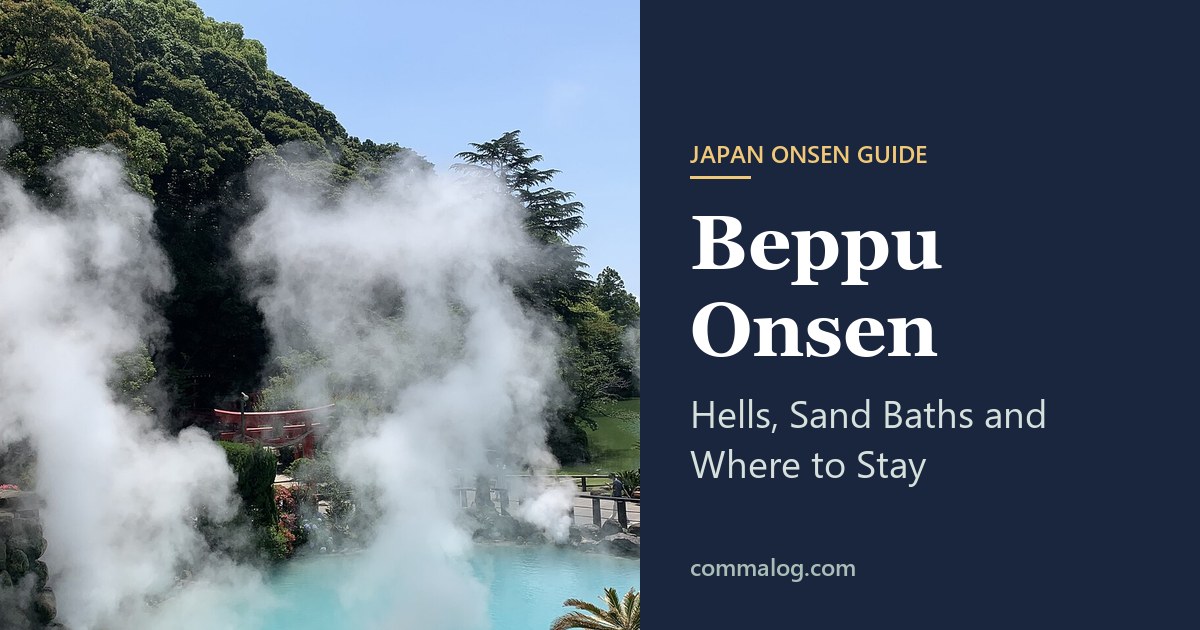
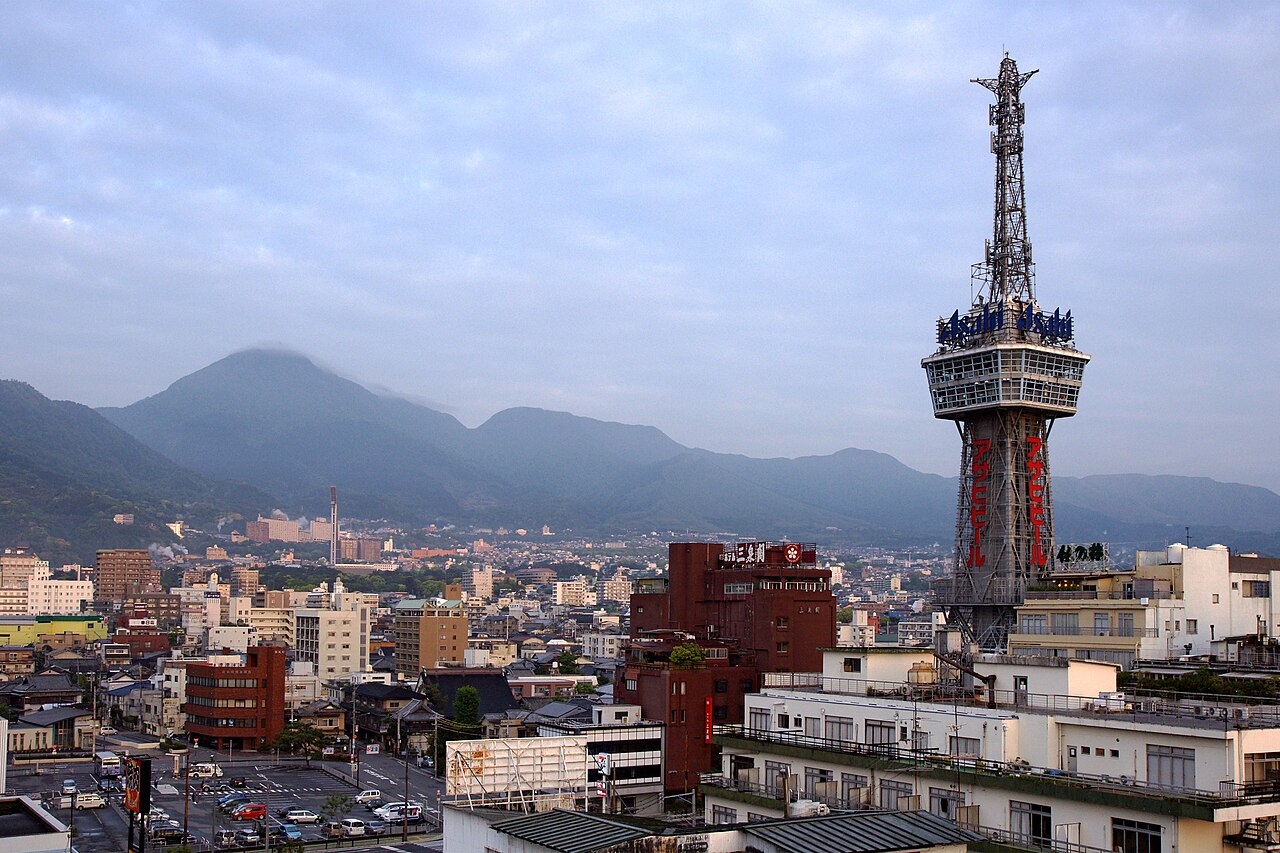
Beppu is the loudest, steamiest onsen town in Japan. It produces more hot spring water than any other resort in the country, and you see it everywhere: plumes rising from rooftops, drains, and hillsides. For a first-timer that’s the appeal and the challenge. There’s a lot here, and it’s spread out.
This Beppu onsen guide is about making the right calls: which baths to try, how to see the famous hells without wasting half a day on buses, and where to sleep so the town works for you instead of against you.
Beppu in a Nutshell
Beppu sits in Oita Prefecture on the island of Kyushu, facing the sea with mountains behind it. Locals traditionally talk about the city’s eight onsen areas (Beppu Hatto), and each has its own feel. You don’t need to visit all eight. Most first-time visitors care about two things: the hells, which cluster around Kannawa, and a good soak somewhere comfortable at night.
The variety of bathing is what sets Beppu apart. Beyond ordinary hot water baths, you’ll find:
- Sand baths, where staff bury you in naturally heated sand while you wear a light cotton robe
- Mud baths, soft and warm, a slightly odd but memorable experience
- Steam baths, where you sit in a small chamber heated by hot spring vapor
- The hells (jigoku), spectacular springs meant for viewing, not bathing
If you only try one unusual bath, make it the sand bath. It’s the one people talk about afterward. And it’s a good fit if you’re nervous about communal nudity, since you keep a robe on.
Beppu vs Oita: Which Should You Base Yourself In?
This comes up a lot, partly because the airport and the prefecture both carry the Oita name. Oita City is the prefectural capital next door. Beppu is the hot spring town. If onsen are the reason for your trip, stay in Beppu. Oita City makes sense mainly as a transit or business stop.
Oita Airport sits roughly 31 to 36 km from Beppu’s center, so flying into Oita from Tokyo or elsewhere in Japan is the most direct way to reach Beppu from the main island of Honshu. Many international travelers instead route through Fukuoka, which has more connections.
Getting to Beppu
Beppu Station is on the JR Nippo Main Line. Here’s how the main routes compare:
| Route | How it works | Good for |
|---|---|---|
| Sonic limited express from Hakata (Fukuoka) | Runs twice an hour; about 2 hours direct | JR Pass holders, anyone who hates changing trains |
| Shinkansen to Kokura, then Sonic | Ride the San’yo Shinkansen for the first leg, switch at Kokura | Travelers who want the fastest rail option |
| Bus from Fukuoka Airport | Highway bus via the Oita Expressway, about 110 minutes; multi-ride coupon tickets available | Landing at Fukuoka and heading straight to Beppu |
| Fly into Oita Airport | Airport is 31-36 km from central Beppu | Coming from Tokyo or Osaka without a rail pass |
The Sonic also stops at Kokura, so if you’re coming from Honshu by shinkansen, that’s your transfer point. With big luggage, the direct Sonic from Hakata is the least hassle. Check discount ticket options for two travelers at the station, as JR Kyushu sometimes offers round-trip deals that make the slower train cheaper than you’d expect.
The Hells: How to See Them Without Losing a Day
The Hells of Beppu (Jigoku-meguri) are the city’s signature sight. They’re boiling, colorful, steaming springs you look at from a safe distance. Seven of them are run by the Beppu Jigoku Association:
| Hell | English name | What to expect |
|---|---|---|
| Umi-Jigoku | Sea Hell | A blue-green fuming pond, the most photogenic of the lot |
| Oniishibozu-Jigoku | Shaven Monk’s Head Hell | Bubbling gray mud that forms round domes |
| Kamado-Jigoku | Boiling Hell | Several pools in different colors |
| Oniyama-Jigoku | Demon Mountain Hell | Steam-heavy, with a crocodile theme |
| Shiraike-Jigoku | White Pond Hell | Milky pale water and a quieter garden setting |
| Chinoike-Jigoku | Blood Pond Hell | Deep red water, the second big photo spot |
| Tatsumaki-Jigoku | Tornado Hell | A geyser that erupts every 30 to 40 minutes for about 5 minutes |
Tickets: Combo or Pay as You Go?
Each hell charges its own admission, and there’s a combination ticket covering the set. The math is simple: the combo ticket comes out cheaper once you visit five or more. If you’re only going to see Umi and Chinoike for photos, pay individually. You also get a small discount on the combo ticket if you show a one-day bus pass.
Getting Around
From JR Beppu Station, buses #2, #5, #9, #41 and #43 run to the Umijigoku-mae stop, which drops you right in the main cluster. The foreign tourist office inside Beppu Station sells one-day bus passes, with a cheaper student rate. If you’re doing the hells plus one other stop (the ropeway, say), the pass pays for itself quickly.
Keep in mind that Chinoike and Tatsumaki sit apart from the main group around Kannawa, so you’ll need a short bus hop between them.
A Simple Hells Plan
The hells open at 8:00 and close at 17:00, though Tatsumaki stays open until its geyser’s last eruption. Here’s the order that works:
- Buy your bus pass at the station tourist office.
- Bus to Umijigoku-mae and start early, before tour groups arrive.
- Walk the main cluster: Umi, Oniishibozu, Kamado, Oniyama, Shiraike.
- Bus over to Chinoike and Tatsumaki to finish.
- At Tatsumaki, check when the last eruption happened. If one just finished, see Chinoike first and come back.
Budget around half a day. Two hours if you’re rushing, but that’s when people come away underwhelmed. And honestly, some hells are more memorable than others. Umi, Chinoike and the geyser are the standouts; the rest are fine if you’ve bought the combo ticket anyway.
Where to Stay in Beppu
Your base matters more here than in a compact town like Kinosaki. Beppu is sprawling, so pick your area by what you’ll actually do.
Stay in Kannawa if the Hells Are the Priority
Kannawa is the steamiest part of town and the most convenient for the hells. You can walk to the main cluster in the morning and be back for a soak before lunch. It also has the most old-fashioned onsen-town atmosphere.
- Kannawaen sits about 100 meters from the Hells of Beppu. Hard to get closer.
- Beppu Kannawa Onsen HIROMIYA has family rooms with tatami floors, air-conditioning and city views. It’s about 35 km from Oita Airport.
Stay by the Sea for Private Baths and Views
If the question on your mind is “Can I get a private onsen in Beppu?”, the answer is yes, and the seafront resorts are where to look.
- AMANE resort SEIKAI has guest rooms with their own open-air hot spring baths overlooking the ocean. It’s a 7-minute walk from JR Beppu Daigaku Station, about a 15-minute drive from Beppu Station, and the hells are within a 15-minute drive. Dinner plans here are popular, so book them early.
- AMANE resort GAHAMA is pitched as a five-star ryokan stay, with a hot spring bath, sun terrace and garden.
- REX HOTEL Beppu offers sea views and direct beachfront access, a good pick if you’d rather have a Western-style hotel with a view.
For a couple on a special trip, an in-room open-air bath facing the sea is the splurge that makes sense in Beppu. You get your soak whenever you want, without worrying about shared-bath etiquette or tattoo rules.
Family-Friendly Options
- Akarinoyado Togetsu has family rooms with private bathrooms, air-conditioning and sea or mountain views.
- Beppu Hatto Onyado Nono Beppu offers family rooms with air-conditioning, free WiFi and modern amenities.
- Beppu SUGINOI HOTEL is the big entertainment pick, with saunas, a bowling alley and karaoke rooms. Bored teenagers, solved.
Quick Comparison
| Property | Best for | Why |
|---|---|---|
| Kannawaen | Hell-hoppers | About 100 m from the hells |
| Beppu Kannawa Onsen HIROMIYA | Families wanting a traditional feel | Tatami family rooms in Kannawa |
| AMANE resort SEIKAI | Couples, private-bath seekers | Ocean-view open-air baths in rooms |
| AMANE resort GAHAMA | Luxury ryokan stay | Hot spring, terrace and garden |
| Akarinoyado Togetsu | Families wanting views | Family rooms with private bathrooms |
| REX HOTEL Beppu | Hotel lovers who want the sea | Beachfront access |
| Beppu SUGINOI HOTEL | Families with older kids | Bowling, karaoke, saunas |
| Onyado Nono Beppu | Families wanting modern comforts | Family rooms, free WiFi |
If you have tattoos, ask about policies for shared baths when you book, or choose a room with a private bath. Same goes for dietary needs and young children: raise them at booking, not at check-in.
Eating in Beppu
You’ll probably eat dinner at your ryokan if you’ve booked a meal plan. That leaves lunch, snacks and the odd night out. Around Kannawa, look for jigokumushi, food steamed over hot spring vents, which is a fun lunch between hells.
Other picks around town:
| Place | What it is | Good for |
|---|---|---|
| Toyoken | The restaurant credited as the origin of chicken tempura (toriten) | Trying Oita’s signature dish at the source |
| Toyotsune | Small, cozy spot serving tendon and fugu, with an English menu | An easy, affordable lunch; fugu for the curious |
| Izutsu | Sashimi sets at low prices | Seafood lovers on a budget |
| Yakiniku Ichiriki | Grilled meat, with lunch cheaper than dinner | A hearty meal; go at lunch for value |
| Hanatokei Coffee and Tea | Coffee shop run by a serious coffee enthusiast, with Japanese and Western dishes | A quiet break or light meal |
Chicken tempura is the one to tick off. It’s a local thing, and Toyoken is where it started.
Beyond the Baths: What Else to Do
Beppu rewards a second day. A few options:
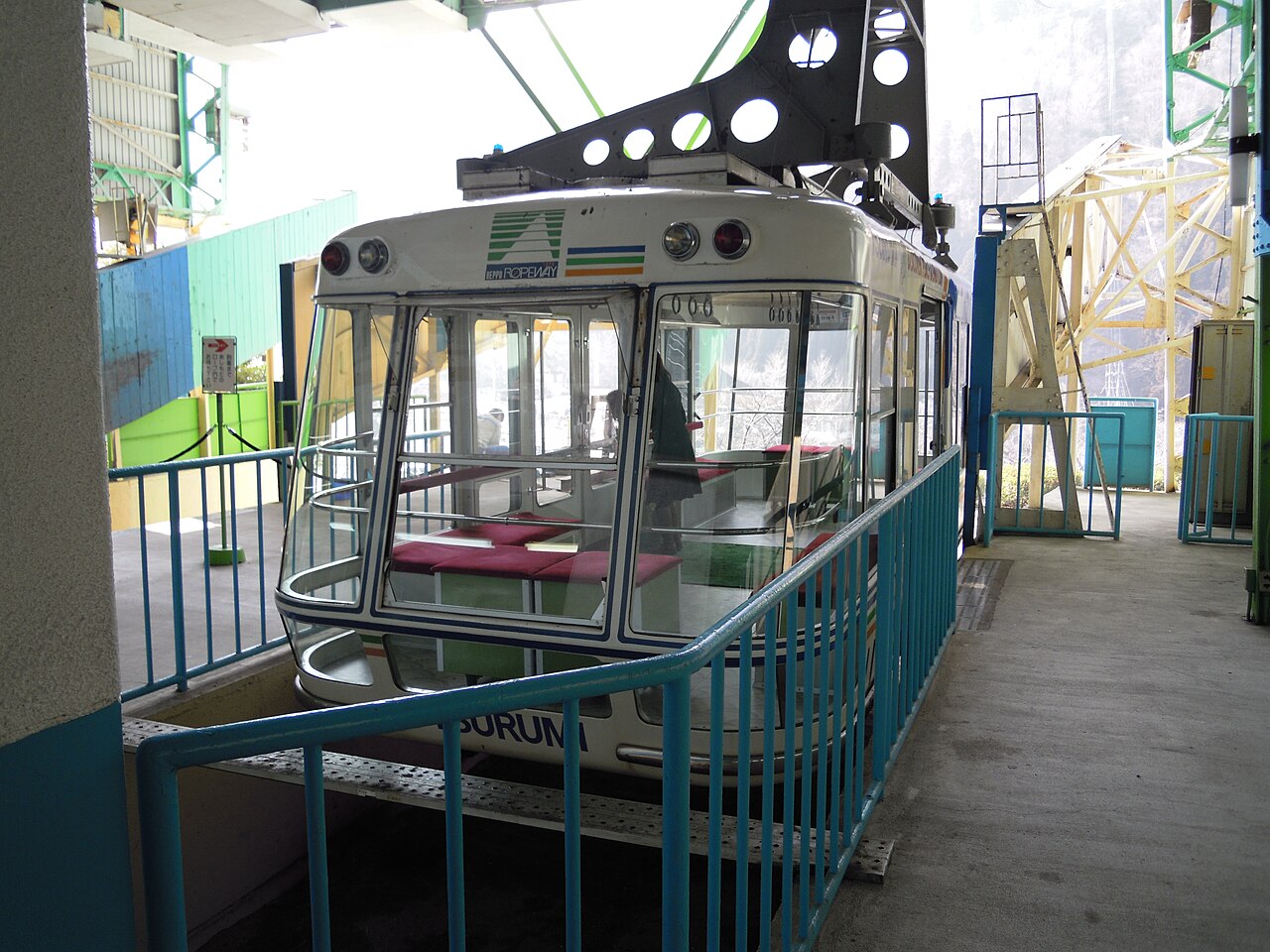
- Beppu Ropeway carries you 800 meters up Mt. Tsurumi for views over the whole city and bay. Go on a clear day, ideally in the morning.
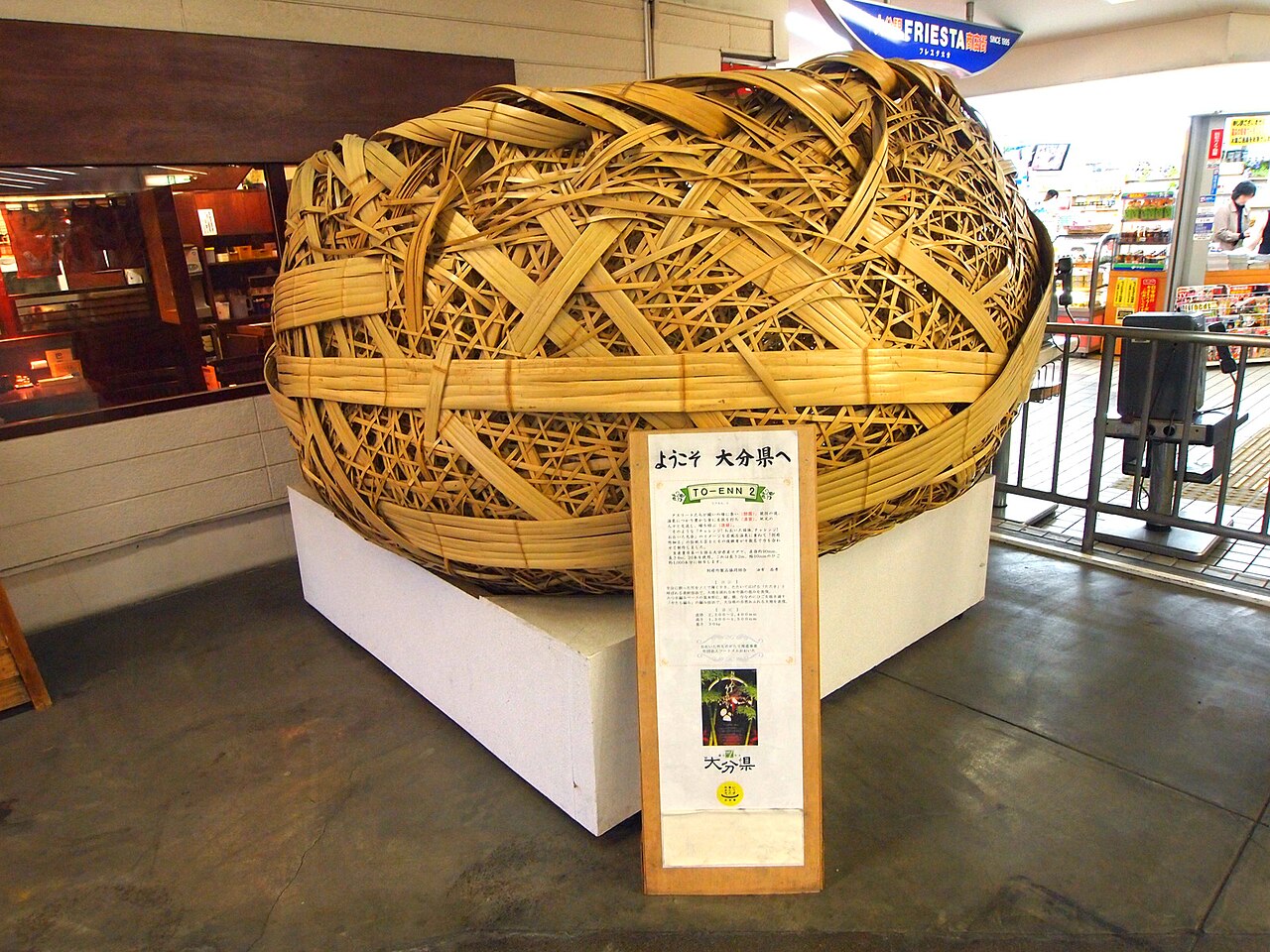
- Beppu City Traditional Bamboo Crafts Center shows off the region’s bamboo craftsmanship and runs courses. A strong rainy-day pick.
- Takasaki Monkey Park is a mountain home to wild monkeys, a hit with kids.
- Umitamago Aquarium sits next to the monkey park, so you can pair them. It’s about a 30-minute drive from AMANE resort SEIKAI.
- Hit Parade Club is an all-you-can-eat-and-drink American 1950s dance hall with a live band. Strange in Japan, which is exactly why some people love it.
Families with kids: monkey park plus aquarium makes an easy half day. Couples: ropeway in the morning, hells after lunch, private bath at sunset.
When to Go and What to Book Ahead
Summer and cherry blossom season are the busiest times, so book rooms well ahead for those periods. Winter is the classic onsen season, when the steam over the city is at its most dramatic and a hot soak feels best.
Two nights is the sweet spot. One night means you’ll spend most of your time arriving and leaving, and Beppu’s spread-out layout punishes rushed visits.
Your Beppu Checklist
- Decide your base: Kannawa for the hells, seafront for views and private baths
- Book accommodation early for summer and cherry blossom season
- Reserve dinner plans at popular ryokans when you book the room
- Ask about tattoo policy, kids and dietary needs at booking
- Pick your route: direct Sonic from Hakata, or shinkansen to Kokura then Sonic
- Buy a one-day bus pass at the Beppu Station tourist office
- Start the hells at 8:00 and time Tatsumaki’s geyser
- Try at least one sand, mud or steam bath
- Eat chicken tempura at least once
- Pack layers: you’ll move between hot baths and cool outdoor air
- Check opening hours before setting out each day
Who Beppu Suits (and Who Might Skip It)
Beppu is a great fit if you want variety in your bathing, love strange volcanic landscapes, or are traveling as a family and need options beyond a quiet ryokan. It’s also friendly to budget travelers, with plenty of cheap eats and affordable stays.
It’s a harder sell if you want a tiny, walkable onsen village with one main street, if you need wheelchair-accessible routes everywhere, or if you dislike crowds at peak season. Some older inns have limited English, so a translation app helps. And if you’re only passing through for one night, you’ll see the steam and not much else.
Places in This Article
Open each place in Google Maps for current hours and directions.
- Toyotsune · Food
- Hanatokei Coffee and Tea · Food
- Toyoken · Food
- Izutsu · Food
- Yakiniku Ichiriki · Food
- Hit Parade Club · Sight / activity
- Beppu City Traditional Bamboo Crafts Center · Sight / activity
- Beppu Ropeway · Sight / activity
- Umitamago Aquarium · Sight / activity
- Takasaki Monkey Park · Sight / activity
Frequently Asked Questions
Is Beppu or Oita City better for an onsen trip?
Stay in Beppu. It's the hot spring resort, with the hells, sand and mud baths and most of the ryokan. Oita City is the neighboring prefectural capital and is mainly useful as a transit stop. Oita Airport is about 31 to 36 km from central Beppu.
Can I get a private onsen in Beppu?
Yes. AMANE resort SEIKAI has guest rooms with their own open-air hot spring baths overlooking the ocean. Several other properties offer family rooms with private bathrooms. A private bath is the easiest option if you have tattoos or are shy about shared baths.
Is the combination ticket for the Beppu hells worth it?
If you plan to visit five or more of the hells, the combination ticket works out cheaper than paying individually, and you get a small extra discount if you show a one-day bus pass. If you only want the photo highlights like Umi-Jigoku and Chinoike-Jigoku, pay at the gate.
How do I get from Fukuoka to Beppu?
The Sonic limited express runs twice an hour from Hakata Station and takes about 2 hours direct. You can save time by taking the San'yo Shinkansen to Kokura and switching to the Sonic there. From Fukuoka Airport, a highway bus via the Oita Expressway takes about 110 minutes.
Where should I stay in Beppu to see the hells?
Kannawa is the most convenient base, since the main cluster of hells is within walking distance. Kannawaen, for example, is about 100 meters from the Hells of Beppu. Seafront resorts are farther out but trade convenience for ocean views and private baths.
How we research: this article is based on the property's official information, reference sources and an analysis of publicly available guest reviews. We have not been paid by the property. Prices, plans and policies change, so confirm details on the official site before booking.