At a Glance
| Location | Kinosaki Onsen, Toyooka City, Hyogo Prefecture, near the main train station |
|---|---|
| Rooms | 20 rooms, tatami and Western-style |
| Baths | Private bath in most rooms; seven public bathhouses within walking distance |
| Meals | Kaiseki dinner with local seafood (crab in season); Japanese breakfast |
| Check-in / check-out | Around 3:00 PM / by 11:00 AM |
| Parking | None on site |
| Best for | Couples, solo travelers and food lovers after a traditional stay |
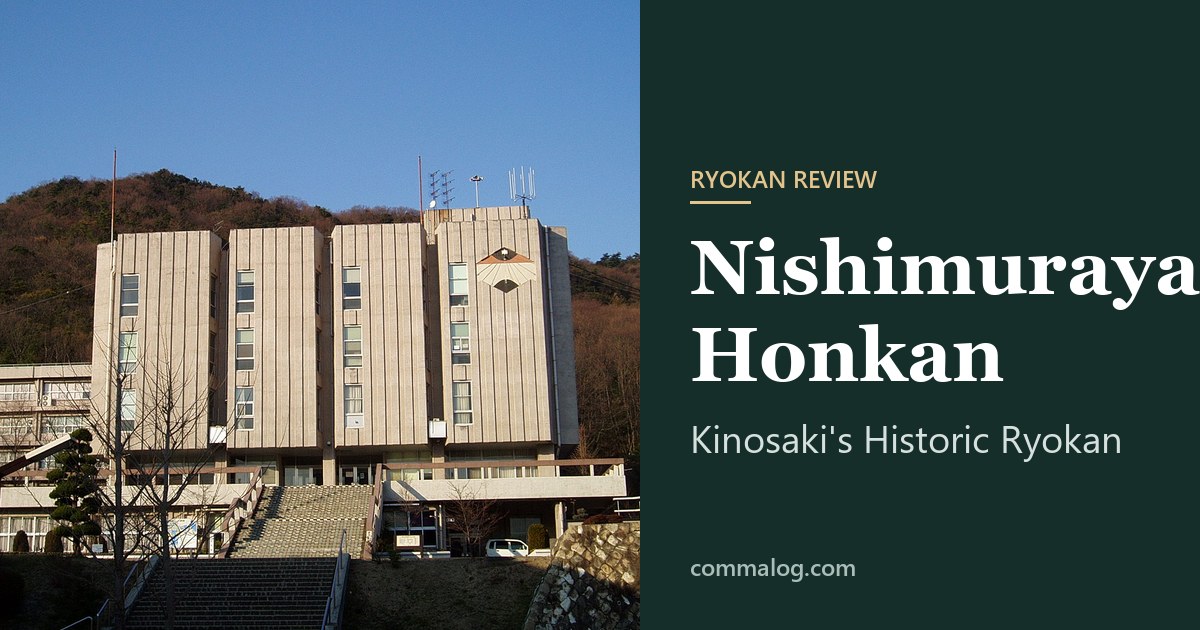
Nishimuraya Honkan is a historic, 20-room ryokan in Kinosaki Onsen, the small Hyogo town where the whole point is to put on a yukata and wander between public bathhouses. It’s a strong pick for couples, solo travelers and anyone coming for crab season who wants traditional architecture and attentive, old-school service. But if you have tattoos, are traveling with young children, or expect modern hotel conveniences, this isn’t your place.
Here’s how to decide, which room to ask for, and how to book it well.
Location and Getting There
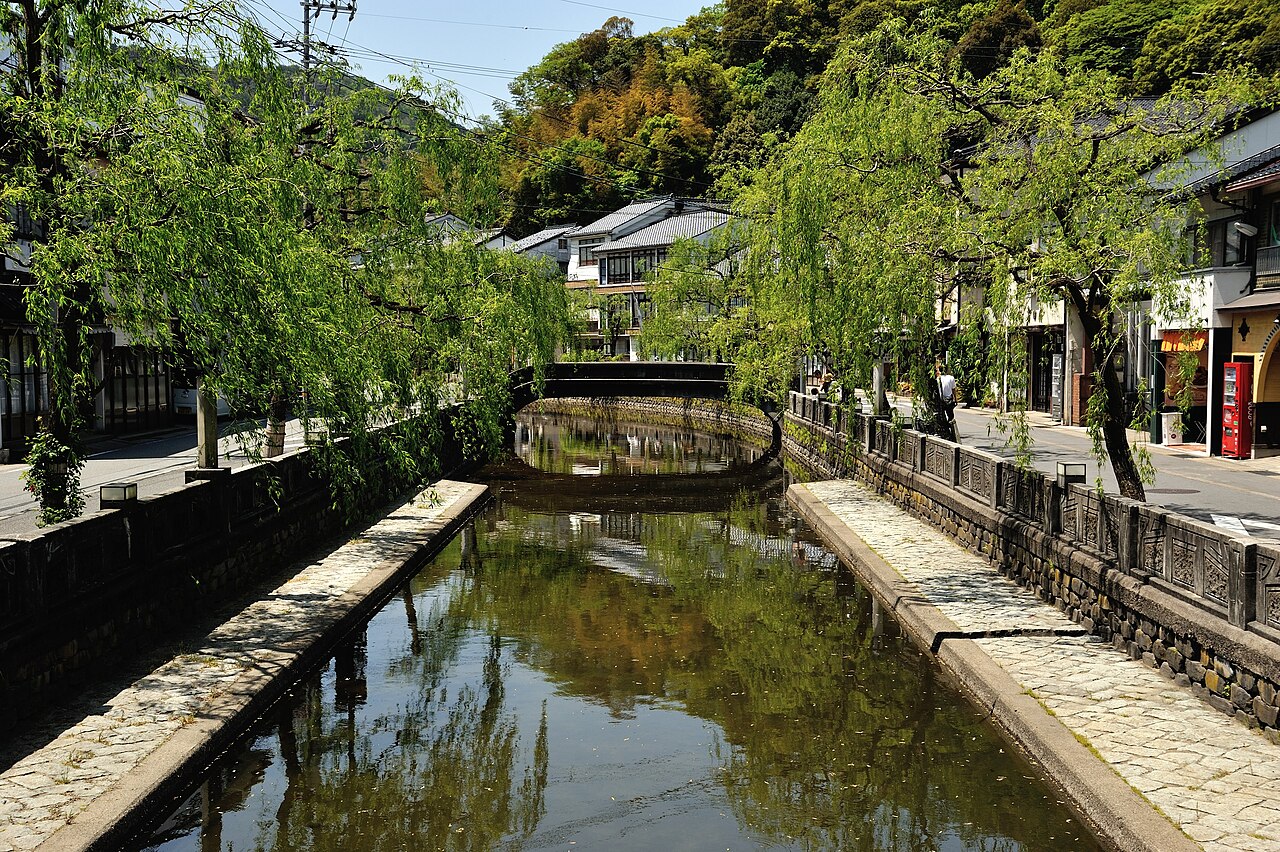
The ryokan sits in Kinosaki Onsen, Toyooka City, near the town’s main train station. That matters more than it sounds. Kinosaki is a train town, and being close to the station means you aren’t dragging a suitcase far down narrow streets.
There’s no parking at the ryokan, so a road trip makes things harder, not easier. Take the train. Limited express services on the JR network run to Kinosaki Onsen Station from the Osaka and Kyoto directions, and the rest of the town is best covered on foot.
| Option | Good for | Watch out for |
|---|---|---|
| Train to Kinosaki Onsen Station | Almost everyone; the ryokan is near the station | Check limited express times in advance, as services are less frequent than in big cities |
| Rental car | Travelers combining Kinosaki with rural Hyogo | No parking at the ryokan; arrange parking elsewhere first |
| On foot once you’re in town | Bathhouse hopping, the ropeway, the literary museum | Wet streets and cold evenings in winter |
If you’re carrying big luggage around Japan, consider forwarding it ahead or leaving it at a base city and arriving with an overnight bag. Ryokan rooms, especially tatami ones, are not designed around two giant suitcases.
Rooms: Pick the Private Bath If You Can
The ryokan has 20 rooms, mixing traditional tatami rooms with Western-style ones. The design leans heavily traditional, and the property is known for its attention to detail in room design.
The key decision is the bath. Most rooms have a private bath, but some rely on access to shared and public baths instead. That difference is bigger than it looks on a booking page.
| Room choice | Who it suits | Trade-off |
|---|---|---|
| Tatami room with private bath | First-timers who want the full ryokan experience, couples, guests with tattoos who still want a soak in the room | Futon bedding on the floor; usually the pricier tier |
| Western-style room with private bath | Travelers who sleep badly on futons or have mobility concerns | Less of the classic ryokan feel |
| Room with shared/public bath access only | Budget-minded travelers planning to spend evenings at the town bathhouses anyway | No soak in your room; you’ll be out in the town baths or nothing |
My pick: a tatami room with a private bath. You get the setting you came for, and you have a fallback when the public bathhouses are crowded or you simply don’t want to get dressed and go back out in winter. When you book, confirm exactly which bath arrangement your room has, since listings can be vague.
Rates change by season and room type, and crab season is the busiest stretch, so expect to pay more and book further ahead then.
The Baths Are the Whole Point
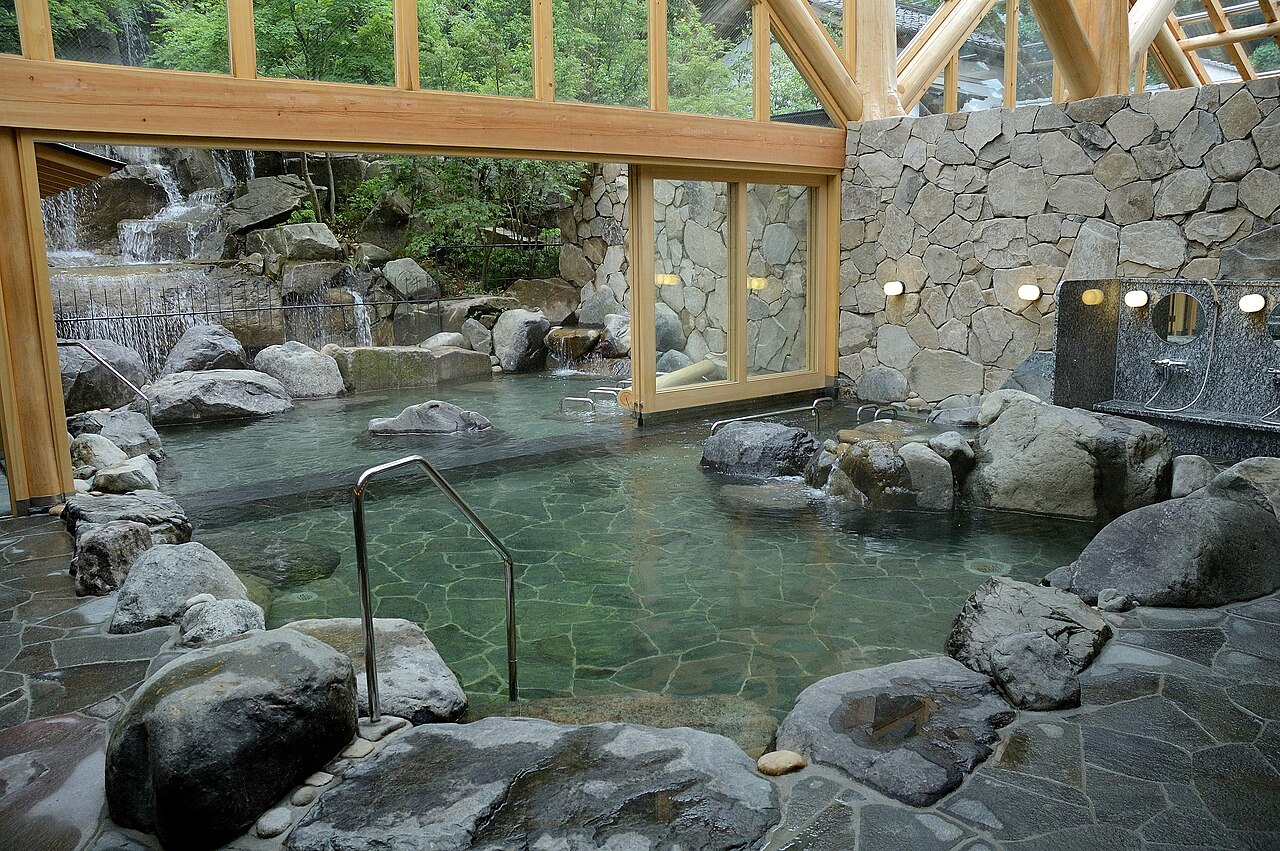
Kinosaki’s draw is its seven public bathhouses, all within walking distance of the ryokan. Staying here, the classic routine is simple: check in around 3 PM, change into a yukata, and spend the late afternoon and evening walking from bath to bath. The ryokan provides yukata for guests, and wearing one around town is the local custom.
The ryokan also mentions seasonal bath treatments as part of its onsen offering, which is worth asking about at check-in.
The Seven Bathhouses at a Glance
| Bathhouse | What stands out | Go if… |
|---|---|---|
| Ichino-yu | Often called the best-rated bathhouse in town (some go further and call it the best in Japan); very busy | You want the headline bath and don’t mind company |
| Goshono-yu | The most picturesque, with a traditional garden and elaborate outdoor baths; lovely in snowfall | You’re visiting in winter or care about scenery |
| Kono-yu | Low-key and relaxing; storks are said to have bathed here in legend | You want quiet |
| Mandara-yu | Temple-inspired architecture; opens late, at 3 PM | You’re bathing in the evening |
| Yanagi-yu | Afternoon-only; its waters are locally reputed for their properties | Your schedule fits an afternoon soak |
| Jizo-yu | Concrete building with roomy ceilings; private baths for rent | You’re with a partner or have tattoos and want a rentable private bath (ask about the rules) |
| Satono-yu | The bathhouse near the station; temporarily closed for renovation as of April 2024 | Check whether it has reopened before you go |
Opening hours vary by bathhouse, so check them before you arrive and plan your route. Ichino-yu fills up, so try it at a quieter hour.
Two Rules That Can Wreck Your Plans
- Tattoos: Tattoos are not permitted in the public baths or onsen areas. That’s a strict policy and the reason this stay is a poor fit for tattooed guests unless you book a room with a private bath and accept that the town bath crawl is off the table. Ask about current rules for rentable private baths when you book.
- Children: Children are not allowed in the public baths. Families with young kids will miss the main reason to come to Kinosaki.
Basic etiquette applies everywhere: wash and rinse thoroughly at the shower stations before getting in, keep your small towel out of the water, and don’t swim or splash. Bring a small towel for hopping between baths.
Dining: Kaiseki, and Crab If You Time It Right
Dinner is a traditional kaiseki meal built around seasonal ingredients, and the dinner plan includes local seafood dishes. During peak crab season, crab takes center stage, and that’s the dinner many people plan the whole trip around.
Book the dinner plan in advance, especially in peak season. This isn’t a formality. Local seafood restaurants in Kinosaki keep limited dinner hours, so if you book room-only and plan to wing it, you may find yourself with few options.
If you’ve never had kaiseki, expect a long sequence of small courses rather than one big plate, served at a set time. Tell the ryokan about allergies or dietary restrictions when you book, not when you sit down. Seafood-heavy menus are hard to adapt on the spot, and vegetarians in particular should ask well ahead.
Breakfast is a traditional Japanese spread with rice, miso soup and seasonal fish. If you need toast and coffee to function, plan on finding coffee in town afterward.
Who Should Book (and Who Shouldn’t)
Book it if you are:
- A couple wanting a romantic, traditional stay with a crab dinner
- A solo traveler interested in classic Japanese hospitality and service
- A food lover timing your trip for crab season
- Coming to Kinosaki specifically to do the bathhouse circuit
- After traditional architecture and cultural touches; the ryokan offers tea ceremonies and other cultural activities, plus a small garden for relaxing
Look elsewhere if you are:
- Traveling with young children (they can’t use the public baths)
- Tattooed and set on the public baths
- Expecting modern hotel amenities or a high-end spa
- Driving and needing on-site parking
- Bringing a pet (pets aren’t allowed)
- Wanting a casual, come-and-go stay; this is a structured, service-heavy ryokan experience
Around the Ryokan
You’ll almost certainly eat dinner in, so think of town as a place for daytime sights, lunch, coffee and snacks between baths.
Kinosaki Onsen Ropeway
A cable car in Kinosaki Onsen, within walking distance of the ryokan, with panoramic views over the town and out to the Sea of Japan. It’s the easiest way to get your bearings on day one.
Onsenji Temple
At the summit of the ropeway, this temple has more than 1,300 years of history. Pair it with the ropeway ride.
Miharashi Terrace Café
Also up top in Kinosaki Onsen, a café with panoramic views serving coffee and light meals. A good lunch-or-coffee stop before heading back down to the baths.
Kinosaki Bungeikan
The literary museum is near the ryokan and is dedicated to Naoya Shiga and the Shirakaba movement, with traditional straw crafts and nostalgic toys. Handy if it rains or you need a break from soaking.
Engeki Quest
An interactive theater experience offered at the Kinosaki Bungeikan museum. Worth asking about if you visit the museum.
Traditional Snack Stalls
Hand-made snacks and refreshments around town, which is exactly what you want when you’re walking between bathhouses in a yukata.
Booking Tips
- Reserve early for peak season. With only 20 rooms, the good ones go fast, especially during crab season.
- Book the dinner plan up front. Local restaurants keep limited dinner hours.
- Confirm your dates are open. The ryokan is reported to close during certain months, including periods in winter, which can overlap with crab season. Check before you build a trip around it.
- Ask exactly what bath your room has. Most rooms have a private bath, but not all.
- Mention tattoos, kids and dietary needs when booking. All three can change what you can actually do here.
- Arrive near 3 PM. Check-in is around then and check-out is by 11 AM, so arriving early gets you the most bath time.
- Stay two nights if you can. One night means one evening of bath-hopping. Two lets you see all seven at a relaxed pace and catch the ropeway in daylight.
Verdict
Nishimuraya Honkan makes sense for a specific kind of trip: a traditional ryokan stay in a town built for walking between baths, with a seasonal kaiseki dinner as the evening’s anchor. Get a tatami room with a private bath, book dinner early, and confirm your dates. If tattoos, small kids or a love of modern hotel comforts are part of your picture, you’ll be happier somewhere else.
Places in This Article
Open each place in Google Maps for current hours and directions.
- Kinosaki Onsen Ropeway · Sight / activity
- Kinosaki Bungeikan · Sight / activity
- Satono-Yu · Sight / activity
- Jizo-yu · Sight / activity
- Yanagi-yu · Sight / activity
- Ichino-yu · Sight / activity
- Goshono-yu · Sight / activity
- Mandara-yu · Sight / activity
- Kono-yu · Sight / activity
- Local seafood restaurants · Food
- Traditional snack stalls · Food
- Onsenji Temple · Sight / activity
- Miharashi Terrace Café · Food
- Engeki Quest · Sight / activity
Frequently Asked Questions
Can guests with tattoos use the baths at Nishimuraya Honkan?
Tattoos are not permitted in the public baths or onsen areas. Tattooed guests should book a room with a private bath and ask the ryokan about current rules before booking.
Do all rooms at Nishimuraya Honkan have a private bath?
Most rooms do, but some rely on shared and public bath access instead. Confirm the bath arrangement for your specific room when you book.
Is Nishimuraya Honkan good for families with kids?
It's not a great fit for young children. Children aren't allowed in the public baths, which are the main reason most people visit Kinosaki.
Is there parking at Nishimuraya Honkan?
No, there are no parking facilities at the ryokan. It's near the main train station in Kinosaki Onsen, so arriving by train is the easiest option.
When should I book for crab season?
Book both the room and the dinner plan well in advance, as peak crab season is busy and the ryokan has only 20 rooms. Also confirm the ryokan is open on your dates, since it closes for certain periods.
How we research: this article is based on the property's official information, reference sources and an analysis of publicly available guest reviews. We have not been paid by the property. Prices, plans and policies change, so confirm details on the official site before booking.
Sources