For a lot of travelers, dinner is the real reason to book a ryokan. You change into a yukata, soak in the bath, and then a parade of small, carefully arranged dishes starts arriving. That parade is kaiseki, and it can be the highlight of a Japan trip or a slightly bewildering two hours, depending on how prepared you are.
This guide walks you through what a kaiseki dinner at a ryokan actually involves: the course order, the timing, where you’ll eat, how to handle dietary restrictions, and what it costs. Short version? Go hungry, go patient, and tell the ryokan about any food issues well before you arrive.
What Kaiseki Actually Is
Kaiseki is a traditional multi-course Japanese dinner whose roots go back to the tea ceremony. The word covers two related things: the simple meal served before a tea ceremony, and the more elaborate set menu served at gatherings. The second one is what you’ll get at a ryokan.
Modern kaiseki pulls from four older food traditions:
- Imperial court cuisine, with its formality and ceremony
- Buddhist temple cuisine, which is plant-based
- Samurai household cuisine
- Tea ceremony cuisine, the source of its restraint and seasonality
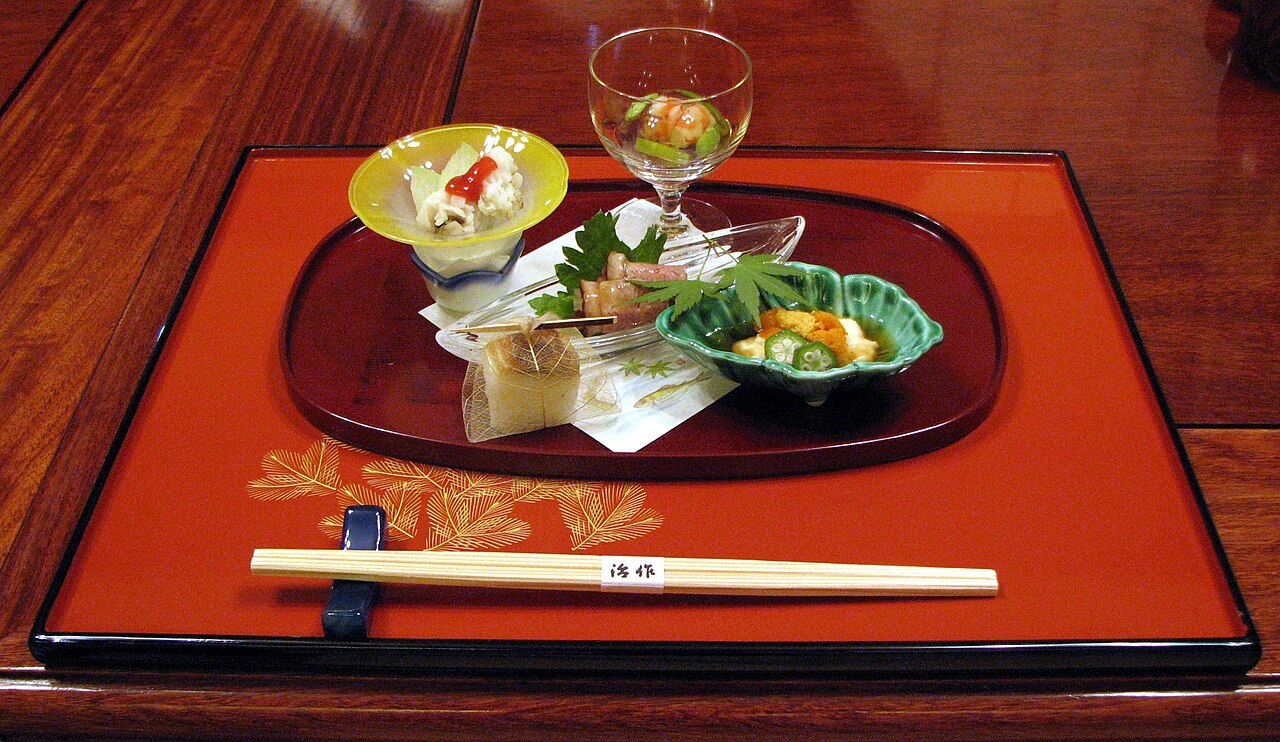
What ties it together is the season. Kaiseki is built around seasonal ingredients, clean flavors, and presentation that borrows from nature: a maple leaf on a plate in autumn, a sprig of something green in spring. Many ryokan lean on local specialties and market produce, so the same course structure tastes very different in a mountain onsen town than on the coast.
The “one soup, three sides” rule
You may see the phrase ichijū sansai, sometimes translated as the Japanese “1-3 rule” for food. It means one soup and three side dishes, and it’s the backbone of cha-kaiseki, the lighter meal served before a tea ceremony. Cha-kaiseki adds a clear soup (suimono), a hassun platter, a pitcher of hot water with toasted rice (yutō), and pickles (kō no mono). The full ryokan kaiseki is a much bigger, more elaborate descendant of that idea.
The Course Order, Dish by Dish
A traditional kaiseki dinner runs 13 to 15 courses in a set order. Ryokan menus vary and many trim or combine courses, but the sequence below is the classic shape. Dishes come one or two at a time, with deliberate pauses between them.
| Course | What it is | What to expect |
|---|---|---|
| Sakizuke | Appetizer | A small bite to open the meal, often paired with a welcome drink |
| Hassun | “Eight-inch” platter | An arrangement of several small items that sets the season’s theme |
| Mukōzuke | Sashimi | Raw fish, usually local or seasonal |
| Takiawase | Simmered dish | Vegetables, sometimes with fish or meat, simmered separately and served together |
| Futamono | Lidded soup | Lift the lid to find the soup; part of the fun is the reveal |
| Yakimono | Grilled dish | Usually fish, sometimes a local meat |
| Su-zakana | Vinegared dish | A sharp, palate-cleansing bite |
| Rice, soup, pickles | The closing savory set | Rice, a soup (often miso) and pickles signal the end of the savory courses |
| Dessert | Sweet finish | Seasonal fruit, a Japanese confection, or ice cream |
A few things first-timers find useful:
- Pace yourself. The portions are small, but there are a lot of them. And the rice arrives at the end, not alongside everything else, so don’t wait for it.
- The rice course means you’re nearly done. If you’re full, eat a little anyway; it’s the traditional close of the meal.
- Ask what things are. Some ryokan hand you a printed menu with course descriptions or a seasonal theme. If yours doesn’t, it’s perfectly fine to ask the server.
- Some ryokan run themed menus around a season or local festival, which is a good reason to look at the dinner plan details when you compare places.
When Dinner Happens (and Why You Can’t Be Late)
Dinner service usually starts around 7:00 PM and runs about two hours. Many ryokan ask you to choose a start time at check-in, and the kitchen plans its timing around that slot. Each course is prepared to be served at a particular moment, so showing up 30 minutes late throws everything off.
That has knock-on effects for your day:
- Arrive early enough to bathe first. The classic ryokan rhythm is check in, soak, then dinner. If you roll in at 6:45 PM, you’ll skip the bath or rush the meal.
- Don’t plan an evening out. Two hours of dinner from 7:00 PM means you’re done around 9:00 PM. Ryokan dinner is the evening.
- Skip the big late lunch. Thirteen-plus courses add up, even when each one is small.
If a long, formal meal sounds like a chore, be honest with yourself. Travelers who want quick or casual dining often find kaiseki dinners slow. Some ryokan sell room-only or breakfast-only plans, which lets you eat elsewhere.
In Your Room or in the Dining Hall?
Ryokan serve kaiseki in a few different settings, and the plan you book usually decides which one you get. It’s worth checking before you pay.
| Setting | What it’s like | Good for | Trade-offs |
|---|---|---|---|
| In-room (heya-shoku) | Staff bring each course to your tatami room | Couples, privacy, the most traditional experience | Often pricier; staff come and go throughout the meal |
| Private dining room | A separate tatami or table room just for your party | Groups, families, privacy without the in-room setup | May need reserving in advance |
| Dining hall | Shared room, often with partitions or tables | Travelers on a budget, those who prefer chairs | Less intimate; set seating times |
| Counter seating | Seats facing the chef, where offered | Food lovers who want to watch the cooking | Less common at ryokan; typically cheaper than private rooms |
Private-room service is the setup most people picture and often prefer. But it’s also the one to reserve early, especially in peak seasons, since there are only so many rooms and staff to go around. If in-room dining matters to you, make sure the plan says so explicitly. “Kaiseki dinner included” doesn’t automatically mean it comes to your room.
If sitting cross-legged on the floor for two hours is hard on your knees or back, a dining hall with tables and chairs might honestly be the better pick. Some ryokan also offer kaiseki in more modern settings, so ask about seating style if it’s a concern.
Dietary Restrictions: Sort It Out Before You Book
This is the part people get wrong most often. Kaiseki menus are planned and ingredients bought ahead, so a request made at check-in may be too late. Ryokan can often accommodate dietary needs on request, and many offer vegetarian options, but you need to ask early.
How to handle it:
- Ask before you book, not after. If a ryokan can’t handle your restriction, you want to know while you can still choose somewhere else.
- Be specific. “Vegetarian” means different things to different people. Say whether you eat fish, eggs, or dairy. Many Japanese broths use dashi made from bonito flakes, so if you avoid all fish, say so directly.
- Name allergies precisely, including how severe they are. Some ryokan send a dietary or allergy questionnaire ahead of your stay; fill it in carefully.
- Confirm a few days before arrival if your booking went through a third party, since messages don’t always reach the kitchen.
An honest warning: guests with severe allergies or very restrictive diets may find kaiseki stressful. Dozens of small components, shared broths, and garnishes make cross-contact hard to rule out completely. A ryokan that specializes in shōjin-style plant-based cooking, rooted in that Buddhist temple tradition, can be a safer bet for strict vegetarians.
Traveling with young children? The quiet, formal atmosphere and long meal can be a lot for small kids. Ask about children’s meals and family dining rooms when you book.
What It Costs
Kaiseki prices range widely. As a rough guide, dinners at top ryokan run from about 5,000 yen to 40,000 yen per person, before drinks. Lunch kaiseki is a cheaper way in, at roughly 4,000 to 8,000 yen per person, and some places serve a bento-style version for lunch or casual meals.
At a ryokan, though, dinner is usually bundled. Meals are often included in the room rate or sold as an add-on, and an overnight stay generally falls somewhere around 15,000 to 30,000 yen per person per night, often with breakfast the next morning. Luxury ryokan go well beyond that. These are ballpark figures and rates shift with season, room type, and day of the week, so treat them as a sense of scale only.
Reading the price tiers
Some ryokan offer the same dinner at different levels, sometimes labeled with the traditional shō-chiku-bai (pine, bamboo, plum) ranking. Higher tiers usually mean more courses or premium ingredients like a prized local beef or seasonal seafood. For a first kaiseki, the middle tier is usually the sensible pick; the top tier is for when the ingredient upgrade is the whole reason you came.
Drinks are generally extra. Sake and other Japanese drinks are the classic match, and some ryokan offer wine or sake pairings. Ask how drinks are charged, since they often get added to your bill at checkout.
Etiquette Without the Anxiety
Kaiseki is formal, but ryokan staff are used to first-time foreign guests. Nobody expects perfection. A few basics will cover you:
- Wearing your yukata to dinner is normal at most ryokan, in your room and usually in the dining hall too. Wrap left over right. If dinner is at a restaurant outside the ryokan, dress neatly instead.
- Lift small bowls toward your mouth for soup and rice; that’s expected, not rude.
- Never stand chopsticks upright in rice or pass food chopstick to chopstick. Both are associated with funerals.
- Replace lids on lidded bowls when you’re done.
- Keep your voice down. The atmosphere is quiet, especially in dining halls.
- Say “itadakimasu” before eating and “gochisōsama deshita” after. Staff will appreciate it.
The tableware is part of the meal, so take a moment to look at it. Many ryokan choose dishes to match the season, and noticing that is half the pleasure.
Your Kaiseki Checklist
Before booking:
- [ ] Check whether dinner is included, optional, or not offered
- [ ] Confirm where dinner is served: in-room, private room, or dining hall
- [ ] Ask about vegetarian, allergy, or other dietary needs, in detail
- [ ] Ask about seating (floor or chairs) if mobility is an issue
- [ ] Ask about children’s meals if traveling with kids
- [ ] Compare price tiers and what each includes
- [ ] Book early for peak seasons, especially for in-room dining
On the day:
- [ ] Arrive in time to bathe before dinner
- [ ] Pick your dinner time at check-in and stick to it
- [ ] Eat a light lunch
- [ ] Budget for drinks on top of the room rate
- [ ] Block out two hours or more and plan nothing after
Is It Worth It?
For most first-time ryokan guests, yes. If you’re curious about food, love seasonal ingredients, or want to understand Japanese hospitality, a kaiseki dinner is the most direct way in. It’s also a lovely meal for couples.
But it isn’t for everyone. If you’re on a tight budget, hate long formal meals, or manage a severe allergy, consider a lunch kaiseki, a dining-hall plan, or a breakfast-only stay instead. The meal works best when you’ve chosen it on purpose, not because it came bundled with the room.
Frequently Asked Questions
What is a kaiseki meal?
Kaiseki is a traditional Japanese multi-course dinner that grew out of tea ceremony cuisine. A traditional version runs 13 to 15 small courses in a set order, from an appetizer and seasonal platter through sashimi, simmered, grilled and vinegared dishes, then rice, soup and pickles, and finally dessert. It's built around seasonal ingredients and careful presentation.
How much does a kaiseki dinner cost?
Prices vary a lot. At top ryokan, kaiseki dinners run roughly 5,000 to 40,000 yen per person before drinks, while lunch kaiseki is around 4,000 to 8,000 yen. At a ryokan, dinner is often bundled into the room rate, with stays generally around 15,000 to 30,000 yen per person per night. Rates change by season and room type, so check current plans.
What is the Japanese 1-3 rule for food?
It refers to ichijū sansai, meaning one soup and three side dishes. It's the basic structure of cha-kaiseki, the simpler meal served before a tea ceremony, and it underlies the idea of a balanced Japanese meal. A full ryokan kaiseki is a much larger, multi-course version of that tradition.
Can a ryokan accommodate vegetarian or allergy needs at kaiseki dinner?
Often, yes, but only if you ask well in advance. Ryokan plan and buy ingredients ahead, so raise dietary needs before booking and be specific, including whether you eat fish-based broth. Guests with severe allergies should confirm details carefully, since kaiseki involves many small components.
Is kaiseki dinner served in your room at a ryokan?
Sometimes. Depending on the ryokan and plan, kaiseki may be served in your room, in a private dining room, in a dining hall, or occasionally at a counter. In-room service is popular and should be reserved early, so check that your plan explicitly includes it.
How we research: this article is based on the property's official information, reference sources and an analysis of publicly available guest reviews. We have not been paid by the property. Prices, plans and policies change, so confirm details on the official site before booking.