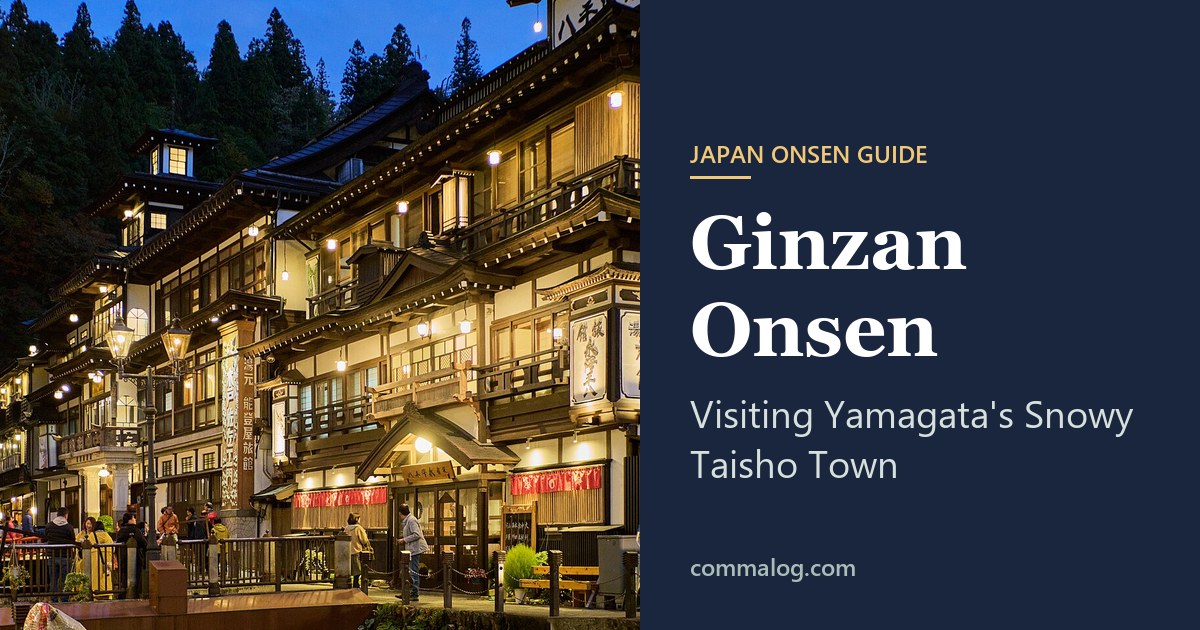
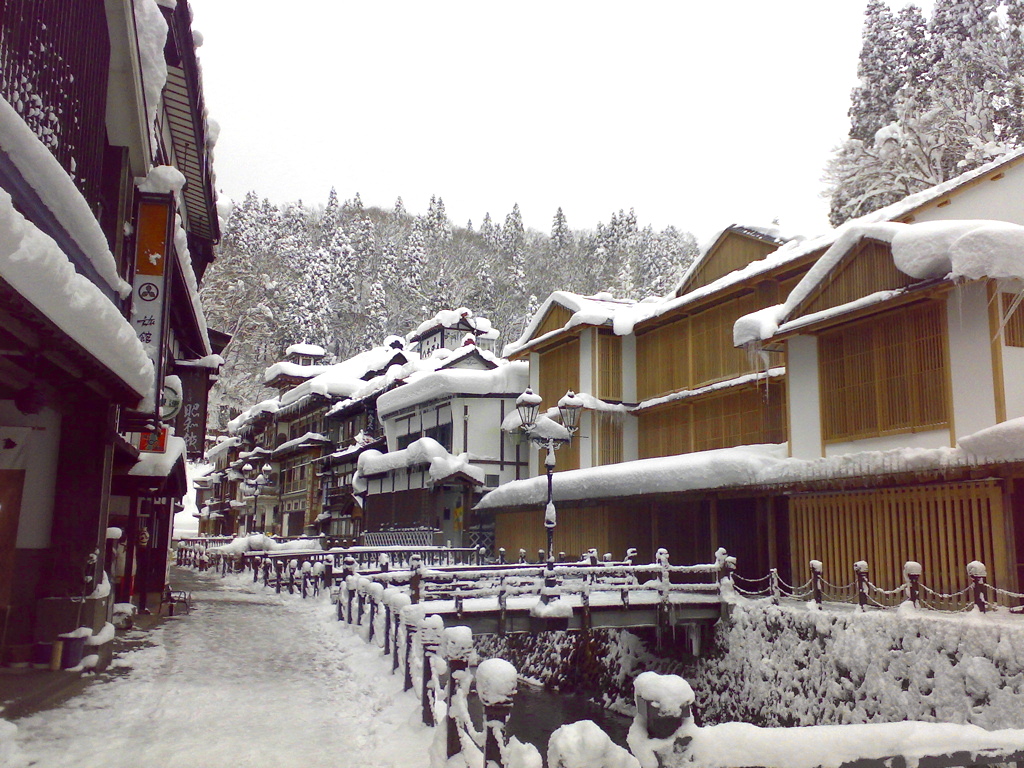
Ginzan Onsen is one short street of wooden ryokan lining a river in Obanazawa, Yamagata Prefecture, and in winter it looks like a set someone forgot to strike. Snow piles on the eaves, gas lamps come on at dusk, and the whole town fits in a single photo. That photo is exactly why the place is hard to visit well.
Here’s the honest version. If you can get a ryokan room for one night, go. It’s one of the most memorable onsen towns in Japan, and the evening is when it makes sense. If you can only manage a rushed day trip in peak snow season, think twice, because you’ll spend much of your time on a bus or in a crowd.
Why One Small Street Draws So Many People
The name means “silver mine hot spring,” and that’s the origin story too. Miners working the nearby silver mines found the hot water roughly 500 years ago, and the town itself was founded more than 400 years ago. When mining faded, the town turned to visitors, and tourism took off in the early 20th century.
What you see today mostly dates from that boom. Several wooden ryokan went up along the banks of the Ginzan River during the Taisho Era (1912-1926), built with bare timber framing and white plaster. The town is laid out around the river, it’s pedestrian-only, and there are no modern buildings inside it. That last point is rarer than it sounds. Most famous onsen towns have a concrete hotel or two creeping into the frame. Ginzan doesn’t.
It also has screen fame. The TV drama Oshin filmed here, and the town is widely linked with Spirited Away. Add heavy snow every winter and you get a place that hundreds of thousands of Japanese visitors come to each year, plus a growing number of foreign travelers who saw the winter pictures online.
So set your expectations. You’re not discovering anything. You’re joining a queue for something that’s genuinely lovely, and the trick is to time things so the queue thins out.
Day Trip or Overnight? Decide This First
Every other choice follows from this one. The town is small, the bus runs every other hour, and the lamp-lit scene happens after dark. Put those together and the overnight stay wins for most people.
| Day trip | One night in a ryokan | |
|---|---|---|
| Gaslit evening scene | Hard to catch and still get back | Yours, after the day crowds thin |
| Bus timing stress | High, since buses leave every other hour | Low, you only need one bus each way |
| Hot spring access | Public baths, foot bath, some ryokan baths | Your ryokan’s baths plus the public ones |
| Early-morning snow walk | No | Yes, the quietest hour in town |
| Booking difficulty | Transport only | Rooms are limited and go early |
| Best for | Tight itineraries, summer or autumn visits | Winter, photographers, couples |
The day trip isn’t wrong in every case. Outside winter the crowds are lighter, and a few hours on the main street plus a walk to the waterfall can feel like enough. But in the snow months, the whole point is the evening. If that’s why you’re going, sleep there.
One more thing for day-trippers: winter visitor rules can change from season to season. Check the town’s latest guidance for evening visits before you build a plan around them.
Getting There Without Fighting the Clock
There’s no train station in town. You ride the JR Yamagata Shinkansen to Oishida Station, then switch to a bus or taxi for the last leg.
The bus
Buses from Oishida to Ginzan Onsen leave every other hour. Look up the timetable before you choose your shinkansen, not after. Arriving at Oishida ten minutes after a bus leaves means a long wait in a small station, and in winter that’s cold.
The taxi
A taxi from Oishida takes the timing problem off the table. It costs more than the bus, but if you’re carrying ryokan luggage through snow or your train lands at an awkward hour, it’s the calmer choice. If you’re staying the night, ask your ryokan how guests usually get in from the station.
Rail passes
The shinkansen leg is covered by the Japan Rail Pass, the JR East Tohoku Area Pass and the JR East South Hokkaido Pass. If Ginzan is part of a wider loop through northern Honshu, the regional JR East passes are worth pricing out against the national pass.
| Leg | How | What to watch |
|---|---|---|
| To Oishida | JR Yamagata Shinkansen | Match your train to the bus timetable |
| Oishida to town | Bus (every other hour) | Missing one means a long wait |
| Oishida to town | Taxi | Easier with luggage and late arrivals |
| In town | On foot only | Pedestrian street, often deep in snow |
Booking a Room: Early, Flexible and a Little Strategic
The ryokan here are historic wooden buildings, not big hotels, so there aren’t many rooms to go around. Winter dates disappear first. If you have a specific weekend in January or February in mind, start looking months ahead.
A few things that help:
- Go midweek. Weekends and Japanese holidays fill first. A Tuesday night gives you better odds and a quieter street.
- Be flexible on the ryokan. The setting is the star here. A plainer room on the main street beats a perfect room you can’t get.
- Lock in dinner early. Ryokan meals are popular and plans can sell out, and there aren’t many places to eat in town once the day crowds leave. Book a plan with dinner included.
- Think about shoulder seasons. Late autumn and early spring still have the wooden facades and the river, with fewer people. You trade the snow for breathing room.
- Ask about the details that matter to you. Tattoo rules for the baths, meals for children and dietary needs vary by ryokan. Ask when you book, not at check-in.
Architecture fans may want to look at Fujiya, a 100-year-old onsen hotel that architect Kengo Kuma redesigned by grafting modern elements onto the historic structure. It’s a striking contrast to the rest of the street.
And yes, this is not a budget destination. The ryokan sit at the higher end, and rates move with season and room type. If cost is a big concern, the shoulder seasons are where you’ll find the most room to choose.
The Baths Open to Everyone
You don’t need a room to get in the water. Ginzan’s hot spring feeds both the private ryokan and the public baths in the town center.
- Two public bathhouses. They’re small and fairly secluded, and one was designed by Kengo Kuma. Expect them to be busy at peak times.
- The foot bath (warashiyu). A good warm-up stop when your boots are soaked. Roll up your trousers and sit for ten minutes.
- A cave hot spring (doukutsu). An unusual extra worth seeking out if you have the time.
- Ryokan day bathing. Some ryokan let non-staying guests use their indoor baths. Policies differ, so check with the specific ryokan before you count on it.
The water carries sulphur and sulphate spring profiles. It runs clear with a slightly salty taste, and springs like this have traditionally been linked with skin care in Japanese bathing culture. Treat that as tradition, not medicine.
If you’re new to shared bathing, the usual rules apply: wash and rinse at the shower stations before you get in, keep your small towel out of the water, and don’t swim or splash.
Beyond the Main Street
Most visitors walk the river, take photos from the bridges and leave. Give yourself an extra hour and walk upstream instead.
Shirogane-no-Taki Falls, a 22-foot waterfall, sits near the old silver mine at the top of town. It’s small, but in winter the ice and snow around it make it one of the best spots for photos away from the crowds on the main bridges. The walk takes you past the area that gave the town its name and its hot water.
Geology fans will like knowing that Miocene-era fossils have turned up in the area. You won’t stumble on any, but it explains why the landscape around the river looks the way it does.
As for timing inside town: arrive in the afternoon, walk the street before dark, then come back out once the gas lamps are lit. If you’re staying the night, set an alarm for the early morning. A snowy street with nobody on it is the view most day visitors never get.
Dressing for Deep Snow
Ginzan gets heavy snow, and the street, bridges and steps can be slick. Pack for it rather than buying things at the station.
- Waterproof boots with real grip, or clip-on spikes for your shoes
- A warm layer that goes on and off easily, since you’ll move between baths, ryokan and the cold
- Gloves that still let you use a phone or camera
- A small bag for wet socks and your bath towel
- A plastic cover for your camera if you plan to shoot in falling snow
If you’re dragging a big suitcase, consider sending it ahead with a luggage forwarding service and traveling with an overnight bag. A pedestrian street piled with snow is not kind to wheels.
Pairing Ginzan With the Rest of Yamagata
Ginzan works best as one night in a longer trip through the prefecture. None of these are walking distance from town, so treat them as separate stops on your route.
| Place | What it is | Good for |
|---|---|---|
| Yamadera | Temple over 1,000 years old with mountain views | History and a good climb |
| Mt. Zao snow monsters | Trees coated in snow into strange shapes | Winter trips and photographers |
| Skiing | Slopes including Zaō Onsen and Tengendai | Skiers adding snow days |
| Mogami River Boat Ride | Guided river boat tour tied to the poet Matsuo Basho | A slower half day |
| Dewa Sanzan | Three holy mountains in Tsuruoka, Shonai, known for Buddhist cuisine | Spiritual travel and food |
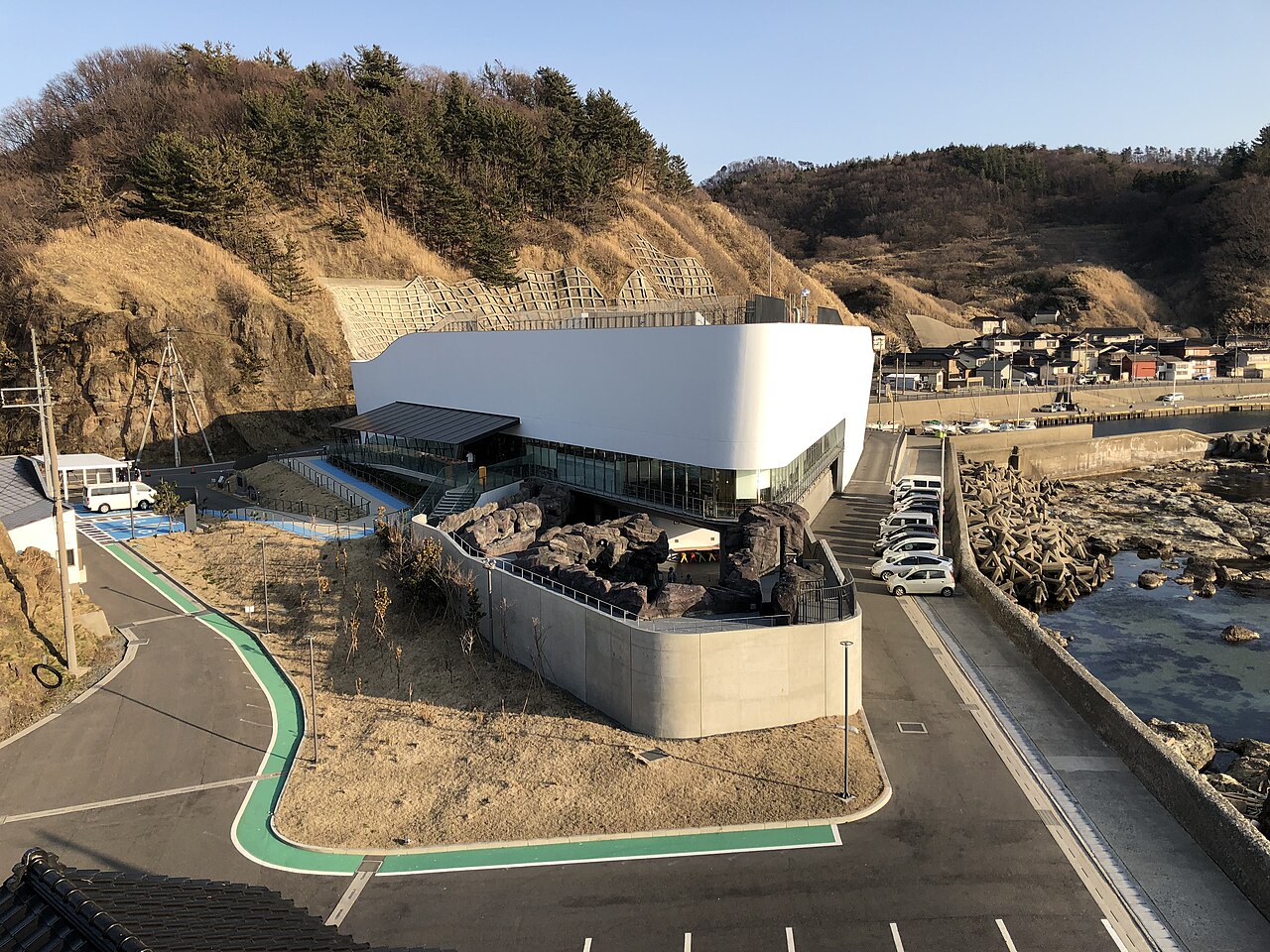
| Kamo Aquarium | Aquarium in Tsuruoka with the largest jellyfish collection in the world | Families and rainy days |
In winter, Mt. Zao snow monsters are the natural partner to Ginzan, giving you two of Yamagata’s best-known snow scenes in one trip. Outside winter, Yamadera is the easy add-on for most travelers.
If your dates are flexible, the festivals are worth planning around: the Hanagasa Festival in summer with its flower hats and dancing, the Imoni Festival in Yamagata City in autumn, built around a giant pot of taro and beef stew, and the Yonezawa Uesugi Samurai Festival in spring.
Is Ginzan Right for You?
You’ll probably love it if you care about old wooden architecture, want winter photos that look unreal, or are traveling as a couple looking for a quiet, traditional night. Fans of Oshin or Spirited Away will get an extra kick out of it.
Look elsewhere if you want lots of restaurants, shops or nightlife, need modern hotel comforts, or are traveling with young children who need more to do than walk and bathe. It’s also a poor fit if you can’t commit to dates early, since spontaneous winter stays are tough here.
Your Ginzan Winter Checklist
- [ ] Decide: overnight stay or day trip (overnight in winter if you can)
- [ ] Book a ryokan with dinner included, months ahead for January and February
- [ ] Aim for a midweek night
- [ ] Check the Oishida bus timetable, then pick your shinkansen to match
- [ ] Ask your ryokan about station transfers, tattoo rules, kids and dietary needs
- [ ] Check current winter guidance for evening visitors
- [ ] Pack grippy waterproof boots and layers
- [ ] Forward big luggage and carry an overnight bag
- [ ] Plan the falls walk and an early-morning stroll
- [ ] Add Mt. Zao snow monsters or Yamadera to the route
Places in This Article
Open each place in Google Maps for current hours and directions.
- Yamadera · Sight / activity
- Dewa Sanzan · Sight / activity
- Kamo Aquarium · Sight / activity
- Mt. Zao snow monsters · Sight / activity
- Hanagasa Festival · Sight / activity
- Imoni Festival · Sight / activity
- Yonezawa Uesugi Samurai Festival · Sight / activity
- Mogami River Boat Ride · Sight / activity
- Skiing · Ski area
Frequently Asked Questions
How do I get to Ginzan Onsen?
Take the JR Yamagata Shinkansen to Oishida Station, then a bus or taxi to Ginzan Onsen. Buses run every other hour, so check the timetable before choosing your train.
Is the Japan Rail Pass valid for getting to Ginzan Onsen?
Yes, for the train part. The Japan Rail Pass, the JR East Tohoku Area Pass and the JR East South Hokkaido Pass can all be used on the JR Yamagata Shinkansen to Oishida. The bus or taxi from Oishida is separate.
Can you visit Ginzan Onsen as a day trip?
You can, and the public baths and foot bath are open to non-staying visitors. In winter, though, the every-other-hour bus and the evening gas lamps make an overnight ryokan stay the better choice. Check current guidance for evening visitors before planning a day trip.
Can non-guests use the hot springs at Ginzan Onsen?
Yes. There are two public bathhouses, one designed by Kengo Kuma, plus a foot bath and a cave hot spring. Some ryokan also allow non-staying guests to use their indoor baths, but policies vary.
When is the best time to visit Ginzan Onsen?
Winter is the famous season, with heavy snow and gaslit evenings, but it's also the busiest. Shoulder seasons bring fewer crowds and easier ryokan bookings if you can skip the snow.
How we research: this guide draws on official tourism and reference sources and well-established Japan travel practice. Policies, rates and child rules differ from ryokan to ryokan, so confirm the details with the property before booking.