Hakone, Kinosaki and Kusatsu show up on almost every list of Japan’s great hot spring towns. But they’re not interchangeable, and picking the wrong one can mean an extra three hours on trains or a bath you can’t use because of a tattoo.
The quick version: Hakone is the convenient, scenic choice from Tokyo. Kinosaki is the most atmospheric town for bathhouse-hopping in a yukata, and it’s an easy add-on from Kyoto. Kusatsu is the one for people who care most about the water itself, and it’s usually the cheapest of the three.
The Short Answer
- Choose Hakone if you’re based in Tokyo, have limited time, want a shot at Mount Fuji views, or want a ryokan room with its own private bath.
- Choose Kinosaki if you’re coming from Kyoto or Osaka and want the old-school onsen town experience: seven public bathhouses, a willow-lined walkable center, fewer crowds than Hakone.
- Choose Kusatsu if you want strong, sulfur-heavy water, a mountain setting with real winter snow, and lower ryokan rates, and you don’t mind a longer trip from Tokyo.
Side by Side
| Hakone | Kinosaki | Kusatsu | |
|---|---|---|---|
| Region | Kanto, west of Tokyo near Mount Fuji | Kansai, part of Toyooka city, Hyogo | Gunma Prefecture, about 1,200 m up |
| Easiest gateway | Tokyo (1-2 hours by train) | Kyoto (about 2.5 hours by limited express) | Tokyo, Ueno Station (2-3 hours by rail plus bus) |
| Getting around | Trains, ropeways, boats; Hakone Free Pass | On foot; few taxis | ¥100 town loop bus, free hotel shuttles |
| Bath style | Open-air and private baths, some in-room | Seven traditional public bathhouses | Strongly sulfuric springs, traditional and modern facilities |
| Best season | Spring and autumn | Spring and autumn | Winter for snow, summer for outdoor baths |
| Tattoos | Some ryokan allow; private baths help | Often allowed, but check | Less accommodating |
| Ryokan price level | Highest of the three | Middle | Lowest of the three |
| Crowds | Can be crowded | Less crowded | Popular with domestic, health-focused visitors |
Getting There With Luggage
Hakone: the easy one
From Tokyo, you take the Shinkansen to Odawara, which is about an hour, then switch to the Hakone-Tozan Line into the mountains. Door to door, plan on one to two hours depending on where your ryokan sits. JR Pass holders still pay a small fare on the Tozan Line because it’s a private railway.
If you’ll be bouncing between Gora, Sounzan, Togendai and Owakudani, look at the Odakyu Hakone Free Pass. It covers unlimited rides on the area’s trains, cable cars, ropeway and boats for its validity period and gets you discounts at some attractions. There’s a two-day version from Tokyo and a cheaper one if you start in Odawara. Rates change, so check the current price before you buy.
One honest warning: Hakone’s loop of trains, ropeways and boats is fun on a day pass and miserable with a big suitcase. Forward your large bags or travel light for the night.
Kinosaki: built for walking
Kinosaki is about 2 hours 25 minutes from Kyoto by limited express. From Osaka the trip is similar in spirit: one long, comfortable train ride to the coast. Once you’re there, the town is small enough to walk, which is the whole charm. Taxis are scarce, so don’t count on one if you’ve overpacked. Comfortable shoes matter here, even if you’ll spend half your time in wooden sandals.
Kusatsu: the trek
Kusatsu has no station of its own. You ride a limited express from Ueno to Naganohara-Kusatsuguchi Station, about 2 hours 20 minutes, then take a bus up the mountain. Budget two to three hours total from Tokyo. The fare for the train leg is in the same ballpark as Kinosaki’s from Kyoto.
Once you arrive, things get easier. Kusatsu runs a cheap town loop bus, and many hotels offer free shuttles, so ask yours about pickup when you book. From Kansai, Kusatsu is a long haul; it fits much better into a Tokyo-based itinerary.
The Vibe: Three Very Different Towns
Hakone isn’t really one town. It’s a spread of hot spring areas strung along mountain railways and ropeways, from Gora up toward Owakudani’s volcanic vents and down to Lake Ashinoko. You get variety and views, and plenty of ryokan with traditional architecture and garden outlooks. You also get the crowds and prices that come with being the closest famous onsen area to Tokyo. It’s popular with domestic and foreign visitors alike, and it shows on weekends.
Kinosaki is the postcard version of an onsen town. It’s one of Japan’s oldest, with a history going back to the 8th century, and Onsenji Temple near the ropeway station has over 1,300 years of history. The town center is compact and traditional. Evenings are the draw: guests wander between bathhouses in yukata, which feels a lot less staged than it sounds. It’s noticeably calmer than Hakone.
Kusatsu is all about the water. The town wraps around Yubatake, a steaming field of hot spring channels that’s the largest of its kind in Japan, fed by volcanic Mt. Kusatsu-Shirane. The altitude gives it real snow in winter and cooler summers. It draws a lot of Japanese visitors who come specifically for the springs, and the mood is more serious soaking than scenic sightseeing.
Bath Culture: How You’ll Actually Bathe
This is the section that should decide it for most people.
Hakone: private baths and big views
Hakone’s strength is choice. Many ryokan have open-air baths, and plenty offer private baths, some built right into the room. If you’re shy about communal bathing, have tattoos, or are traveling as a couple who want to bathe together, Hakone makes that easy. You’ll pay for it, but the option is there.
Kinosaki: the bathhouse crawl
Kinosaki’s seven public bathhouses are the main event. Each has its own character, with indoor and outdoor options. Two names you’ll hear a lot: Ichino-yu, whose name nods to an old claim of being the finest bath in the land, and Kono-yu, the stork bath tied to the town’s founding legend. Most visitors try to hit several in one stay.
During busy periods, plan your bathhouse visits ahead rather than winging it, since popular ones fill up at peak evening hours. Standard onsen etiquette applies: wash thoroughly at the shower stations before you get in, keep your small towel out of the water, and no swimsuits.
Kusatsu: strong water, serious soakers
Kusatsu’s springs are strongly sulfuric, and they’ve had a reputation as therapeutic waters in Japan for a very long time. A German physician, honored at the Kusatsu Bälz Memorial Hall, did a lot to promote them. Treat that reputation as tradition, not a medical promise.
Practically, sulfur water smells like it sounds and can tarnish silver jewelry, so leave rings and necklaces in your room. Facilities range from traditional to modern, and many ryokan have private baths. For an outdoor soak with river views, Sainokawara Park is the well-known open-air option. And don’t miss yumomi, the traditional practice of paddling the hot water with long boards to cool it, which you can watch at the Netsu-no-yu Performance Center.
When to Go
- Hakone: Spring and autumn give you the best odds of clear Mount Fuji views. Summer haze often hides the mountain. Weekends and holidays get busy, so book early in any peak period.
- Kinosaki: Spring and autumn for mild weather, which matters when you’re walking between bathhouses in a yukata.
- Kusatsu: Winter is the signature season, with snow around steaming outdoor baths. Summer is the other sweet spot, when the altitude keeps outdoor bathing pleasant instead of sweltering.
If you’re traveling in the depths of winter, Kusatsu is the clear pick. In the heat of summer, it’s also the one where you’ll most enjoy sitting in hot water outdoors.
Tattoos, Kids and Other Deal-Breakers
Tattoos. Kinosaki is the friendliest of the three, with ryokan often allowing tattoos, though you should still confirm before booking. Hakone is mixed; some ryokan allow them, and booking a room with a private bath sidesteps the issue entirely. Kusatsu is the least accommodating, so if you have visible ink, ask each ryokan directly or book a room with its own bath.
Children. Kusatsu’s traditional onsen culture makes it less geared toward young kids. Kinosaki and Hakone tend to feel more relaxed for families. If you’re bringing small children anywhere, ask about kids’ meals, futon setup and family bath options when you book.
Arrival day. Ryokan run on set check-in and dinner times, and the multi-course dinner is often the main event of your stay. Don’t try to land on a long-haul flight and race to Hakone the same evening. Give yourself a night in Tokyo first.
Dietary needs. Ryokan dinners are set menus prepared in advance. Mention allergies, vegetarian needs or religious restrictions at booking, not at check-in.
Money: Which Town Stretches Your Budget
None of these is a true budget destination, but the price gap between them is real. Standard ryokan rooms in Hakone run highest, Kinosaki sits in the middle, and Kusatsu is usually the most affordable of the three. Prices shift a lot by season, day of the week and room type, and weekend stays cost noticeably more in all three.
Most ryokan in every town include dinner and breakfast in the rate. Some in Hakone and Kinosaki also offer room-only plans, which can bring the cost down. In Kinosaki that’s a decent trade, since the bathhouses are the main event anyway. In Hakone, think twice: dinner options outside the ryokan are thinner once the day-trippers leave.
If you’re paying for a private in-room bath, Hakone is where it’s most widely available. If you want the most bath time per dollar, Kusatsu wins.
What to Do Between Baths
Hakone
- Owakudani: the volcanic valley of sulfur vents and steaming pits. Good for anyone who wants dramatic scenery.
- Hakone Sightseeing Ships: pirate ship-style boats across Lake Ashinoko. Corny, and kids love them.
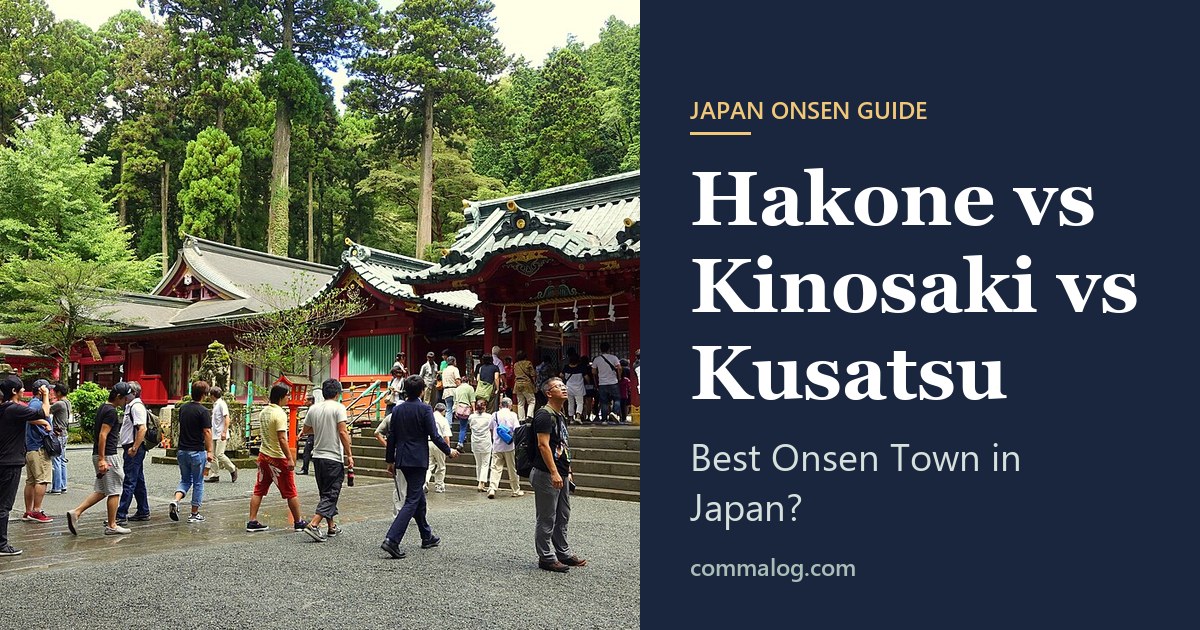
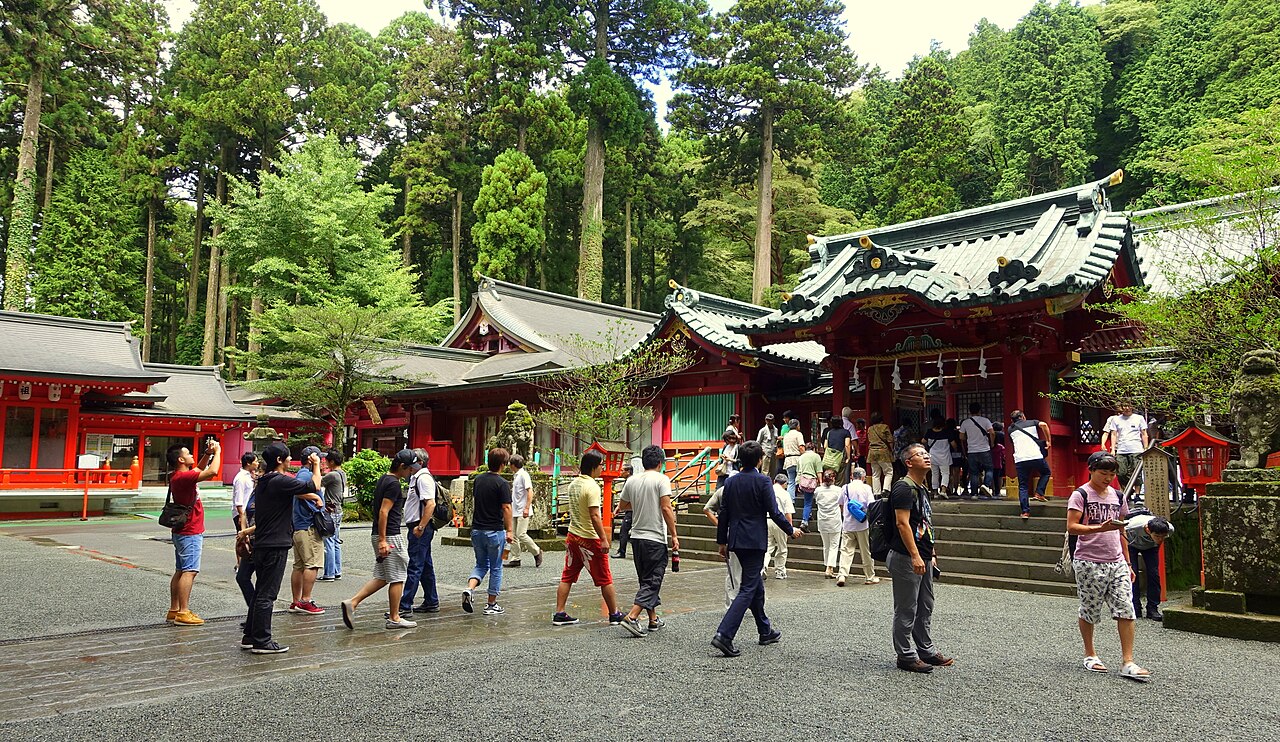
- Hakone Jinja Shrine: on the south shore of the lake, with traditional architecture. The calmer, more photogenic stop.
Kinosaki
- Kinosaki Onsen Ropeway: views over the town and out to the Sea of Japan.
- Onsenji Temple: near the ropeway station, with over 1,300 years of history.
- Kinosaki Bungeikan: a literary museum dedicated to Naoya Shiga and the Shirakaba movement. Best for book lovers.
- Kinosaki Marine World: an aquarium near the main town, and the easy family pick.
Kusatsu
- Yubatake: the hot water field in the middle of town. You’ll walk past it constantly, and it’s worth seeing after dark too.
- Netsu-no-yu Performance Center: the yumomi water-stirring show.
- Sainokawara Park: open-air bath plus nature trails.
- Asama Volcano Museum and Kusatsu Visitor Center: for the volcanic and natural backstory.
- Tropical Zoo Kusatsu Nettaiken: a tropical animal park heated by hot spring water, handy with kids or on a cold day.
- Kusatsu Bälz Memorial Hall and Kataoka Tsurutaro Art Museum: smaller indoor stops for a snowy afternoon.
Booking Checklist
- Decide your base first: Tokyo points to Hakone or Kusatsu; Kyoto or Osaka points to Kinosaki.
- Book Hakone ryokan well in advance, especially for spring, autumn and weekends.
- Choose your bathing style: private in-room bath, ryokan shared baths, or public bathhouses.
- Confirm the tattoo policy in writing if you have any ink, especially in Kusatsu.
- Ask about children’s meals and bedding if you’re traveling with kids.
- Send dietary requirements when you book.
- Ask about shuttle pickup in Kusatsu.
- Price out the Hakone Free Pass if you’ll ride the full loop.
- Pack light or forward big bags, especially for Hakone and walkable Kinosaki.
- Leave silver jewelry at home or in the room for Kusatsu’s sulfur baths.
So, Which One?
First trip to Japan, one night to spare, flying out of Tokyo? Hakone. It’s the least hassle and the views can be superb.
Spending a few days in Kyoto and want the onsen town you’ve seen in photos? Kinosaki. It’s the one I’d pick for a first ryokan experience if your route allows it.
Visiting in January, or on a tighter budget, and more excited about the water than the scenery? Kusatsu, and pack warm.
Places in This Article
Open each place in Google Maps for current hours and directions.
- Owakudani · Sight / activity
- Hakone Jinja Shrine · Sight / activity
- Onsenji Temple · Sight / activity
- Kinosaki Bungeikan · Sight / activity
- Yubatake · Sight / activity
- Asama Volcano Museum · Sight / activity
- Sainokawara Park · Sight / activity
- Kusatsu Bälz Memorial Hall · Sight / activity
- Tropical Zoo Kusatsu Nettaiken · Sight / activity
- Kataoka Tsurutaro Art Museum · Sight / activity
- Kinosaki Marine World · Sight / activity
- Kinosaki Onsen Ropeway · Sight / activity
- Hakone Sightseeing Ships · Sight / activity
- Kusatsu Visitor Center · Sight / activity
- Netsu-no-yu Performance Center · Sight / activity
Frequently Asked Questions
Which onsen town is easiest to reach from Tokyo?
Hakone. It's about an hour to Odawara by Shinkansen, then a short ride on the Hakone-Tozan Line, so one to two hours in total. Kusatsu takes two to three hours from Ueno, including a bus at the end.
Is Kinosaki worth the trip from Kyoto or Osaka?
If you want the classic onsen town experience, yes. The limited express from Kyoto takes about 2 hours 25 minutes, and the town's seven public bathhouses and walkable center make it a natural one- or two-night side trip.
Which onsen town is best if I have tattoos?
Kinosaki is generally the friendliest, though you should confirm with your ryokan. In Hakone, some ryokan allow tattoos and many rooms have private baths. Kusatsu is the least accommodating, so check policies before booking or reserve a room with its own bath.
Which is the cheapest of Hakone, Kinosaki and Kusatsu?
Kusatsu's ryokan are usually the most affordable, Kinosaki sits in the middle, and Hakone is the most expensive. Rates vary a lot by season, weekday versus weekend, and room type.
When is the best time to visit each town?
Spring and autumn suit Hakone, when Fuji views are more likely, and Kinosaki, for mild walking weather. Kusatsu is best in winter for snowy outdoor baths and in summer, when its altitude keeps outdoor bathing comfortable.
How we research: this article is based on the property's official information, reference sources and an analysis of publicly available guest reviews. We have not been paid by the property. Prices, plans and policies change, so confirm details on the official site before booking.