Most people come to Hakone for a ryokan and a long soak. That’s the right instinct. But you’ll have hours between check-out and check-in, or a full day if you stay two nights, and Hakone has more worth doing than most onsen towns in Japan.
Here’s the short version. Do the transport loop (train, cable car, ropeway, boat) on the clearest morning you get. Use museums and big bathhouses as your rainy-day plan. And go in knowing the place can be crowded, pricey and a bit kitschy, because it’s one of the most popular escapes from Tokyo.
Why Hakone Is So Famous
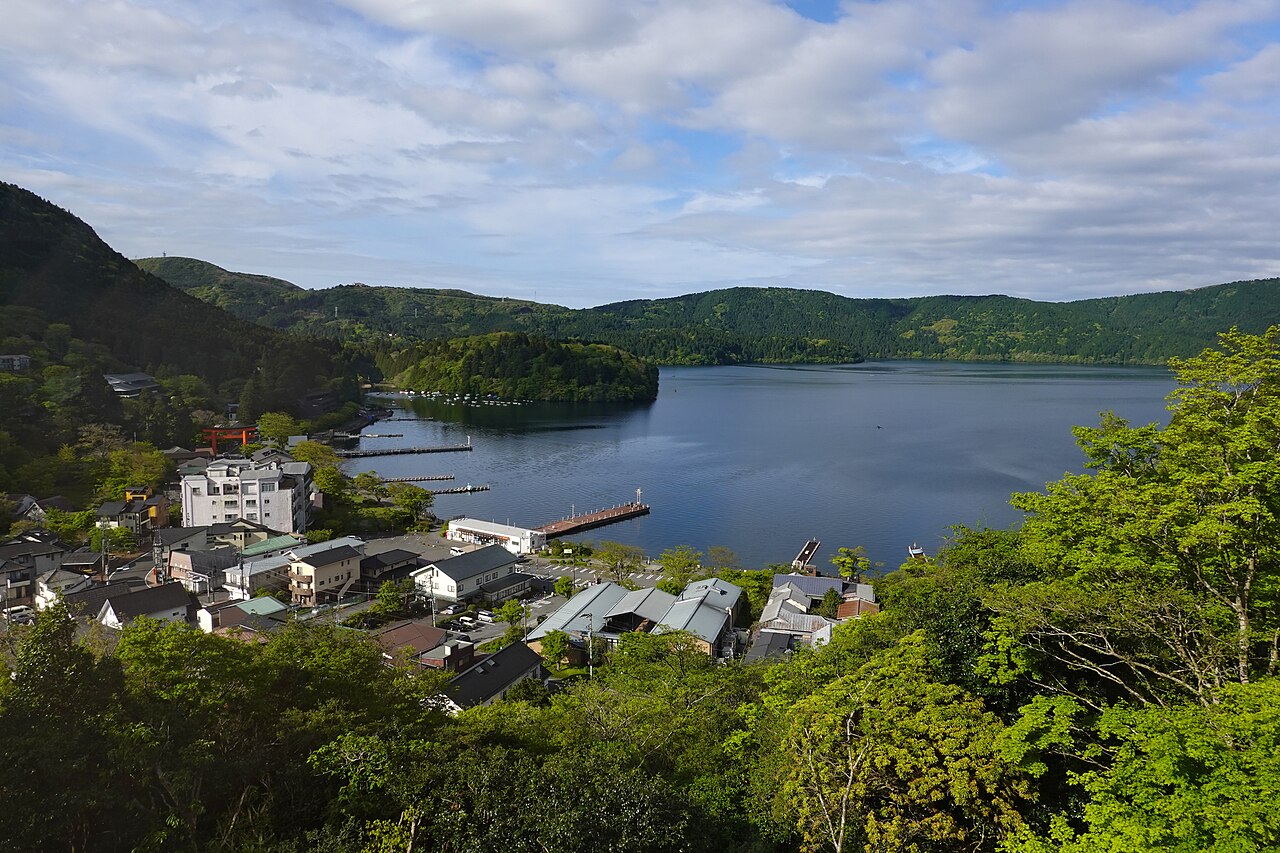
Hakone is a mountainous area west of Tokyo inside Fuji-Hakone-Izu National Park. It sits on the Golden Route between Tokyo and Osaka, close enough for a day trip but better as an overnight. Two things built its reputation: hot springs with a deep ryokan tradition, and the chance of seeing Mount Fuji from Lake Ashinoko.
That word “chance” matters. Fuji only shows itself on clear days, and you can’t book clear weather. Plan your loop day flexibly if you’re staying more than one night.
A quick note for anyone searching “Kanagawa to Hakone” or “Hakone or Kanagawa”: it’s not a choice. Hakone is in Kanagawa Prefecture, the same prefecture as Yokohama and Kamakura. If you’re coming from Yokohama, you’re already most of the way there.
Getting There and Getting Around
You have several ways in from Tokyo, and the right one depends on where you start and how much luggage you’re dragging.
| Route | Time | Best for |
|---|---|---|
| Tokaido Shinkansen (Kodama) to Odawara, then Hakone-Tozan Line to Hakone-Yumoto | About 1 hour | Speed, and JR Pass holders, who pay only a small top-up for the Tozan leg |
| Odakyu line from Shinjuku | 85-90 minutes (slower commuter trains are cheaper) | Value, especially paired with the Hakone Free Pass |
| Highway bus from Shinjuku Expressway Bus Terminal to Togendai | About 2.5 hours | Heading straight to the lake side |
| Direct bus from Haneda Airport to Hakone-Yumoto | About 2 hours | Landing at Haneda with big bags |
| Keikyu to Yokohama, JR Tokaido to Odawara, Hakone-Tozan to Hakone-Yumoto | About 2 hours | Haneda arrivals who prefer trains |
If you’re on a Japan Rail Pass, the Kodama is the obvious pick. Reserve seats early in peak season. If you’re not, the Odakyu route from Shinjuku with a Free Pass usually makes the most sense.
The Hakone Free Pass
The Odakyu Hakone Free Pass gives you unlimited rides on Hakone’s transport network for two or three days, plus discounts at many hot springs, museums and restaurants. You can buy it starting from Shinjuku or from Odawara, and the three-day version costs only a little more than the two-day one. If you plan to do the full loop, it almost always pays for itself. Buy it ahead so you’re not queuing at the station.
The Classic Loop, Leg by Leg
This loop is the single best thing to do in Hakone, and it’s mostly transport. That’s the fun of it.
- Hakone-Tozan Line: a mountain railway from Odawara via Hakone-Yumoto up to Gora. Slow, switchbacking and scenic.
- Hakone-Tozan Cablecar: from Gora up to Sounzan.
- Hakone Ropeway: from Sounzan over Owakudani’s steaming volcanic slopes and down to Togendai on Lake Ashinoko.
- Hakone Sightseeing Ships: across the lake from Togendai to Moto-Hakone and Hakone-machi.
You can run it in either direction. One handy detail if you linger: the Hakone-Tozan Bus still runs back to Hakone-Yumoto or Odawara after 8 p.m. Still, if your ryokan serves dinner at a set time (most do), aim to be back by mid to late afternoon.
The Big Three Stops on the Loop
Great Boiling Valley (Ōwakudani)
This is a live volcanic zone of sulphurous springs right by the Owakudani ropeway station. Steam vents, yellow rock, the smell of eggs. It’s the most dramatic landscape in Hakone and the most crowded. Go early in the morning if you can, when crowds are thinner and views tend to be better.
And yes, buy the black eggs (kuro-tamago). They’re boiled in the sulphurous water, which turns the shells mottled black. They come in packs of five, so this is a share-with-the-group snack.
Lake Ashinoko and the Pirate Ships
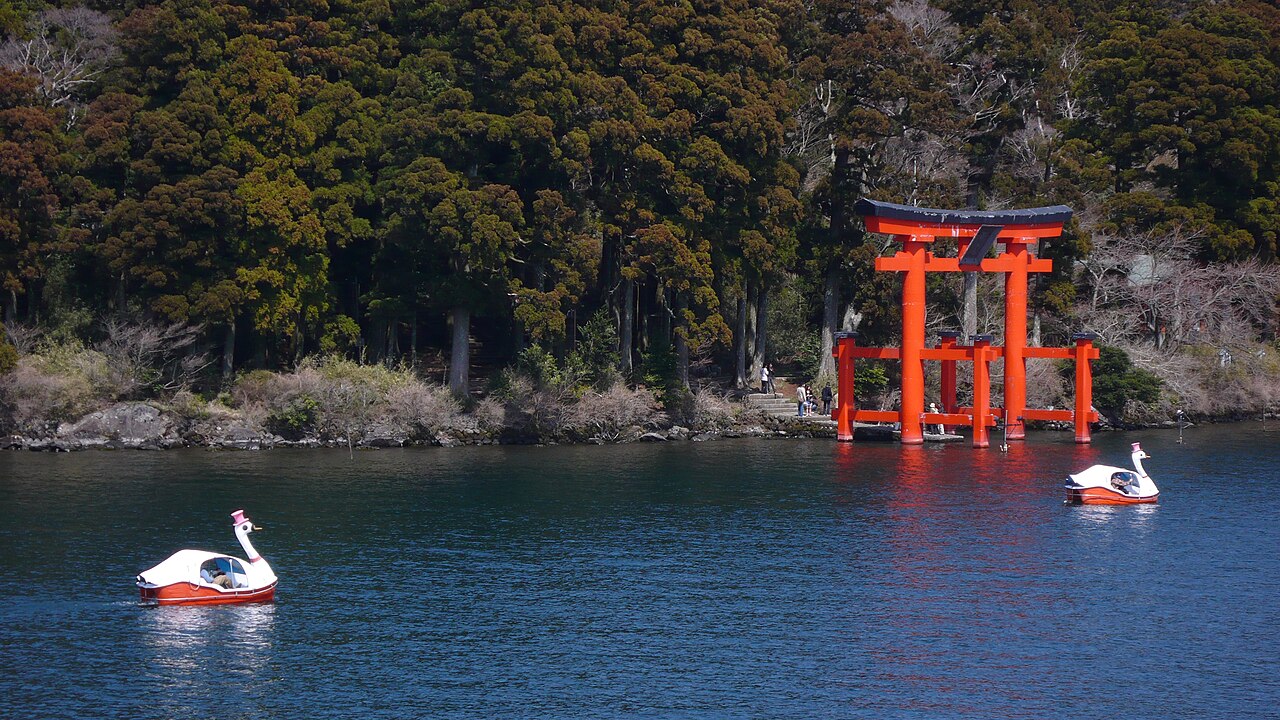
The lake is where you might get your Fuji view. The sightseeing ships are decorated like cartoon pirate ships, which sounds silly and is. Kids love them. Adults mostly love them too, once they stop pretending not to.
Hakone Jinja Shrine
Near Moto-Hakone, this Shinto shrine is famous for its torii gate standing in the lake. It’s the most photographed spot on the water, so expect a line of people waiting for their turn at the gate. Get off the boat at Moto-Hakone and walk over.
Museums That Earn the Detour
Hakone has more good museums than a hot spring town has any right to. They’re your best friend on gray days, and they open daily during standard daytime hours (roughly 9 a.m. to 5 p.m. for the bigger ones), so don’t leave them until late afternoon.
| Museum | What you’ll see | Good for | Price level |
|---|---|---|---|
| Hakone Open Air Museum | Western and Japanese sculpture in parkland, plus a Picasso pavilion | Families, art lovers, fair weather | Mid-range; Free Pass gives a discount |
| Pola Museum of Art | Impressionist paintings and Picasso, collected over 40 years by Suzuki Tsuneshi | Serious art fans, rainy days | The priciest of the bunch |
| Hakone Museum Of Art | Ancient Japanese earthenware, moss garden, tearoom | Quiet, contemplative visit; children free | Mid-range |
| Hakone Museum of Photography | Images of Hakone and Mount Fuji | A short stop, or your Fuji view on a cloudy day | Inexpensive |
If you only pick one, make it the Hakone Open Air Museum. Sculpture outdoors on a mountainside is more fun than it sounds, and the open space suits kids who can’t do quiet galleries. The Pola Museum of Art is the better choice if you’d rather spend two hours with paintings indoors.
The Hakone Museum Of Art is the calm option, with its moss garden and tearoom. And the Hakone Museum of Photography is small, but on a day when Fuji refuses to appear, it’s a decent consolation prize.
Day-Use Hot Springs
Your ryokan has baths. So why pay for another? Because the big day-use places offer something different, and they’re excellent fillers on check-out day or in bad weather.
Tenzan Tōjigō
A large hot spring complex in Hakone-Yumoto with indoor and outdoor baths and a sauna. It runs a free shuttle bus and opens late morning until 8 p.m. Prices are moderate, with a lower child rate. It’s a good last soak before the train home.
Hakone Kowakien Yunessun
This is the theme-park version of onsen: rapids, Dead Sea-style salt baths, jacuzzis, waterfalls and a sake bath. It’s open from March to October and costs considerably more than Tenzan, though kids pay about half. If you’re traveling with children, this is probably the day they’ll talk about later.
One booking-critical tip: if anyone in your group has tattoos, check each bathhouse’s current policy before you go. Rules vary in Japan, and you don’t want to find out at the front desk.
Where to Snack and Grab Lunch
You’ll likely eat dinner at your ryokan, so think of Hakone’s food as lunch, snacks and souvenirs.
- Black eggs (kuro-tamago): at Owakudani. The obligatory snack.
- Sagamiya: mountain brownies made on-site, right in front of Hakoneyumoto station. Easy to grab while you wait for a train.
- Nukafuku: a vegan and gluten-free bakery tucked inside a souvenir shop, selling rice bran sweets including doughnuts. Useful if anyone in your group has dietary restrictions.
- Tamura Ginkatsu-Tei: known for tofu katsuni, a tofu and pork dish, with vegetarian options. It’s popular, so try to reserve ahead.
- PUBSTOP Pizza & Bar: draught beer from Gora Brewery and pizzas, including vegetarian and vegan options. Good for a relaxed lunch when everyone’s done with Japanese food for the day.
Two more local things to look for: soba, the local specialty, served cold or hot with tofu, tempura or vegetables; and Hakone beer, a locally brewed craft beer. For souvenirs, look for Hakone Yosegi Zaiku, the traditional wooden parquetry made in Hakone. Small boxes and coasters pack easily.
Hakone With Kids
Hakone works well for families, with one caveat. The terrain is steep, transport transfers are frequent and stations get packed, so families with very young children or strollers should keep days short and luggage light. Consider sending bags ahead or leaving them at your hotel.
The best kid picks:
- The pirate ships on Lake Ashinoko. Low effort, high delight.
- The ropeway over Owakudani, plus black eggs at the top.
- Hakone Kowakien Yunessun (March to October) for the themed baths.
- Hakone Open Air Museum, where there’s room to move between the sculptures.
- Hakone Museum Of Art if your kids can handle a quiet visit; children get in free.
Skip the long hike to Mt. Komagatake with small children. More on that below.
What to Do in Hakone in the Rain
Rain doesn’t ruin Hakone. It just changes the plan. Fuji will be hidden and the lake loses some of its appeal, so swap the loop for indoor time:
- Pola Museum of Art for a long, unhurried indoor visit.
- Hakone Museum of Photography for the Fuji views you aren’t getting outside.
- Tenzan Tōjigō, where a hot bath in light rain is arguably the best version of the experience.
- Hakone Kowakien Yunessun in season, which keeps kids busy for hours.
- A long soba lunch, or beer and pizza at PUBSTOP.
If you have two nights, keep the loop as your floating day and slot it into whichever morning looks clearer.
Hiking for Active Travelers
There are trails around Lake Ashinoko, including a route from Togendai to Owakudani and up to Mt. Komagatake. Plan on two and a half to three hours, with steep climbs and descents. It’s a real hike, not a stroll.
The timing trap: the last cable car down from Mt. Komagatake leaves at 4:50 p.m. Miss it and your afternoon gets much longer. Check current schedules before you set out, wear sturdy shoes and start early.
A Simple Plan for One or Two Days
One day (or a single night): arrive in the morning, take the Tozan Line, cablecar and ropeway to Owakudani, eat black eggs, ride down to Togendai and take the pirate ship to Moto-Hakone for Hakone Jinja Shrine. Head to your ryokan in time for dinner.
Two days: do the loop on the clearer day. Spend the other on one or two museums and a day-use bathhouse, with lunch at Tamura Ginkatsu-Tei or PUBSTOP. Grab brownies at Sagamiya on the way out.
Before-You-Go Checklist
- Buy the Hakone Free Pass ahead if you’ll do the loop.
- Reserve Kodama seats early in peak season if you’re using the Shinkansen.
- Check the weather and save the lake for the clearest day.
- Get to Owakudani early to beat the crowds.
- Visit museums earlier in the day, since they close in the late afternoon.
- Reserve popular lunch spots like Tamura Ginkatsu-Tei.
- Confirm the last cable car and bus times before any hike.
- Pack sturdy shoes, even if you’re not a hiker.
- Check tattoo policies at any day-use bathhouse you plan to visit.
- Leave time to reach your ryokan before its set dinner hour.
Places in This Article
Open each place in Google Maps for current hours and directions.
- Great Boiling Valley (Ōwakudani) · Sight / activity
- Hakone Jinja Shrine · Sight / activity
- Lake Ashinoko · Sight / activity
- Hakone Open Air Museum · Sight / activity
- Pola Museum of Art · Sight / activity
- Hakone Museum of Photography · Sight / activity
- Hakone Museum Of Art · Sight / activity
- Tenzan Tōjigō · Sight / activity
- Hakone Kowakien Yunessun · Sight / activity
- Black eggs (kuro-tamago) · Food
- Sagamiya · Food
- Nukafuku · Food
- Tamura Ginkatsu-Tei · Food
- PUBSTOP Pizza & Bar · Food
Frequently Asked Questions
How do you get around Hakone?
Most visitors use the classic loop: the Hakone-Tozan Line from Odawara or Hakone-Yumoto up to Gora, the cablecar to Sounzan, the Hakone Ropeway over Owakudani to Togendai, and the sightseeing ship across Lake Ashinoko to Moto-Hakone and Hakone-machi. Buses fill the gaps, and the Hakone-Tozan Bus runs back to Hakone-Yumoto or Odawara after 8 p.m. The Hakone Free Pass covers unlimited rides for two or three days.
Why is Hakone so famous?
Hakone combines hot springs and a long ryokan tradition with mountain scenery in Fuji-Hakone-Izu National Park, all close to Tokyo. On clear days you can see Mount Fuji from Lake Ashinoko, and the volcanic valley at Owakudani is one of the most striking landscapes near the capital.
What can you do in Hakone when it rains?
Switch to indoor plans: the Pola Museum of Art, the Hakone Museum of Photography, or a day-use bathhouse like Tenzan Tōjigō. From March to October, Hakone Kowakien Yunessun is a good option for families. Save the lake and ropeway loop for a clearer day if your schedule allows.
Is Hakone good for kids?
Yes, especially for the pirate ships on Lake Ashinoko, the ropeway over Owakudani, black eggs, the outdoor sculpture park at the Hakone Open Air Museum and the themed baths at Yunessun. Families with very young children should expect steep terrain, crowded stations and frequent transfers, so keep days short and luggage light.
Is Hakone in Kanagawa?
Yes. Hakone is a mountain area in Kanagawa Prefecture, west of Tokyo. You can reach it from Tokyo in about an hour by Shinkansen to Odawara plus the Hakone-Tozan Line, or in about 85-90 minutes on the Odakyu line from Shinjuku.
How we research: this article is based on the property's official information, reference sources and an analysis of publicly available guest reviews. We have not been paid by the property. Prices, plans and policies change, so confirm details on the official site before booking.
1 thought on “Things to Do in Hakone: Sights, Kids and Rainy Days”